Who is involved
- Public authorities and institutions
- Civic architects
- Construction managers
- General contractors
- Facade and public-art teams
Project-based stone fabrication from Hui'an, Fujian

Institutional and civic architecture
Public and institutional projects require a clear approval trail, durable material selection, coordinated interfaces and inspection records that can support multiple professional stakeholders and formal procurement requirements. Boda Stone develops the fabrication package from approved project information for international delivery.
Direct project answer
Public and institutional projects require a clear approval trail, durable material selection, coordinated interfaces and inspection records that can support multiple professional stakeholders and formal procurement requirements. A reliable quotation separates confirmed scope from assumptions and identifies who approves architecture, artwork, engineering, samples and site interfaces.
Commercial and technical scope
Stone fabrication information should connect with the architect, engineer, contractor, installer and approval authority without transferring local design responsibility by assumption.
Application in view
Visual context helps a buyer see why component coordination, production control and logistics belong in one project conversation.

Scale, durability and public interfaces are reviewed together with the building's approved architectural language.
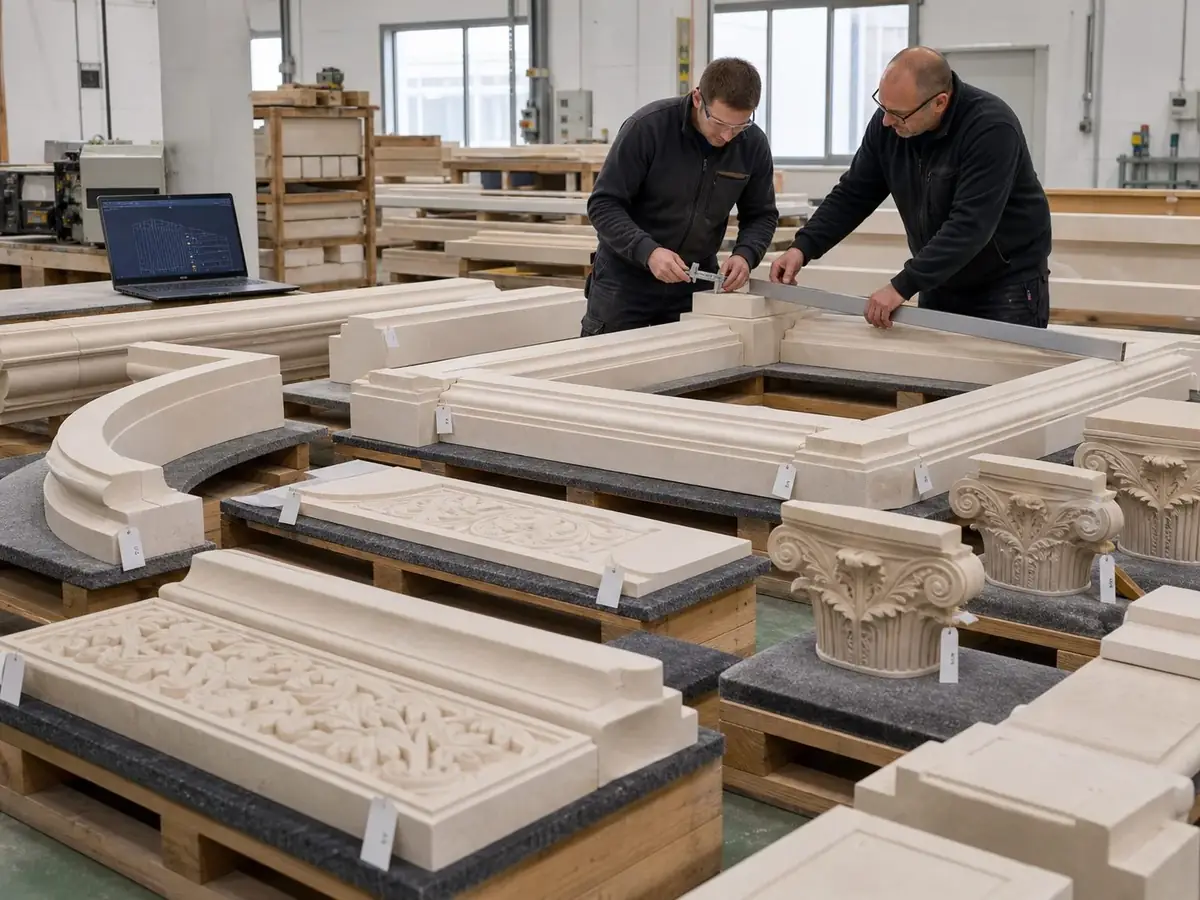
Specified material, dimensional, finish and approval records can be aligned with formal project hold points.

Stone architecture and sculpture can be coordinated around the same site interfaces, lifting access and delivery programme.
Concept and process illustrations — not completed client projects.
Programme and delivery risks
Quality focus
Project workflow
Each approval and inspection point is adjusted to material, geometry, quantity, artwork and the responsibilities in the actual contract.
Separate the stone fabrication package from local structure, waterproofing, anchorage, installation and other trade responsibilities.
Check drawings, schedules or models, material, finish, quantities, interfaces, destination and approval status.
Align samples, profiles, first pieces, artwork, models or mock-ups before related production is released.
Combine cutting or CNC production with hand carving, surface finishing and component identification.
Check the project-defined dimensions, appearance, interfaces and agreed handover records at useful stages.
Protect and sequence the work with weights, packing lists and assembly references for local site teams.
Relevant product categories
Each category page explains design inputs, materials, quality checks, fabrication route and quotation questions.
Related planning guides
These planning scenarios show possible scope and workflow; they are not completed client projects.
Chicago, United StatesFine-grained grey granite with honed and fine-tooled finishes
 Philadelphia, United States
Light grey-beige limestone with fine-tooled carved surfaces
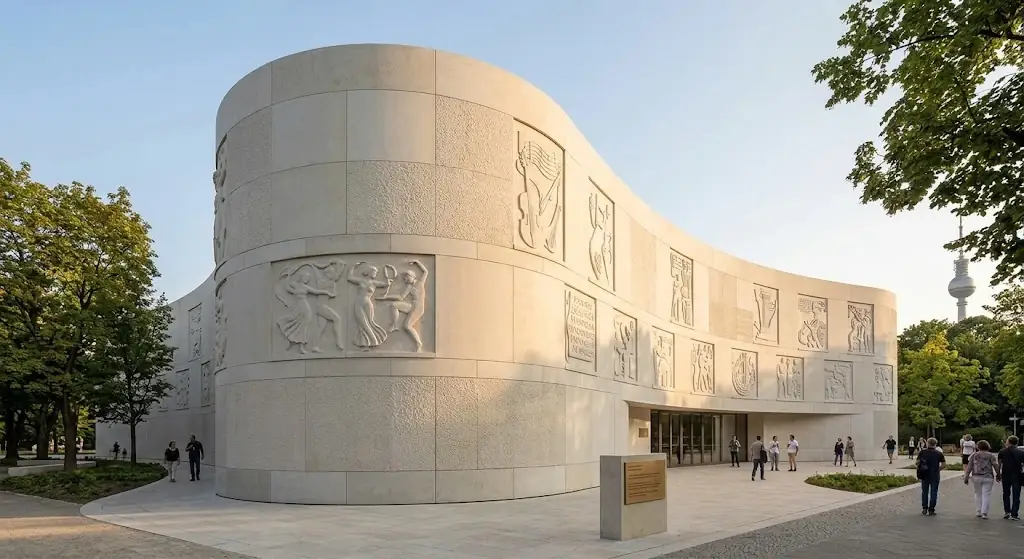 Berlin, Germany
Dense light limestone with honed and fine-tooled finishes
Application FAQ
Practical answers for architects, developers, contractors, artists, consultants and procurement teams.
The fabrication scope can include agreed samples, first pieces, progress records, inspection hold points, packing schedules and access for an independent inspector. Contract documents must define the exact format and authority.
Selection should consider climate, moisture and salt exposure, public contact, finish, maintenance, component section, engineering requirements and applicable project-specified testing. Commercial stone names alone are not enough.
Early review is useful when profiles, block sizes, curves, carving, joints, piece weights or logistics may affect the design. Production should begin only after the applicable information and approvals are clearly released.
The team can develop fabrication geometry, component information and production models within the agreed scope. The project architect and qualified local engineers remain responsible for design intent, structure, anchorage, waterproofing, code and installation approvals.
Send drawings or a 3D model, overall and component dimensions, quantities, material and finish preference, destination, site access information and the target approval and delivery programme.
Programme depends on drawing status, samples, stone availability, quantity, carving complexity, model approvals, trial assembly and shipping. A project-specific schedule follows technical review.
Yes. The appropriate approval reference may be a material range, finish sample, full-size profile, mock-up, first piece, relief master or artist-approved model depending on the work.
Local installation is normally performed by the buyer's qualified contractor under local engineering and code requirements. The fabrication package can include piece marks, weights, packing sequence, assembly references and remote coordination.
Your actual application
We will identify the suitable product scopes, missing information, approval route and a project-specific fabrication basis.