Who is involved
- Private client representatives
- Residential architects
- Interior and landscape designers
- General contractors
- Specialist stone installers
Project-based stone fabrication from Hui'an, Fujian

Private residential architecture
Villa and estate packages work best when porticos, openings, cornices, balustrades, stairs and landscape stone are coordinated as one architectural system rather than purchased as unrelated pieces. Boda Stone develops the fabrication package from approved project information for international delivery.
Direct project answer
Villa and estate packages work best when porticos, openings, cornices, balustrades, stairs and landscape stone are coordinated as one architectural system rather than purchased as unrelated pieces. A reliable quotation separates confirmed scope from assumptions and identifies who approves architecture, artwork, engineering, samples and site interfaces.
Commercial and technical scope
Stone fabrication information should connect with the architect, engineer, contractor, installer and approval authority without transferring local design responsibility by assumption.
Application in view
Visual context helps a buyer see why component coordination, production control and logistics belong in one project conversation.
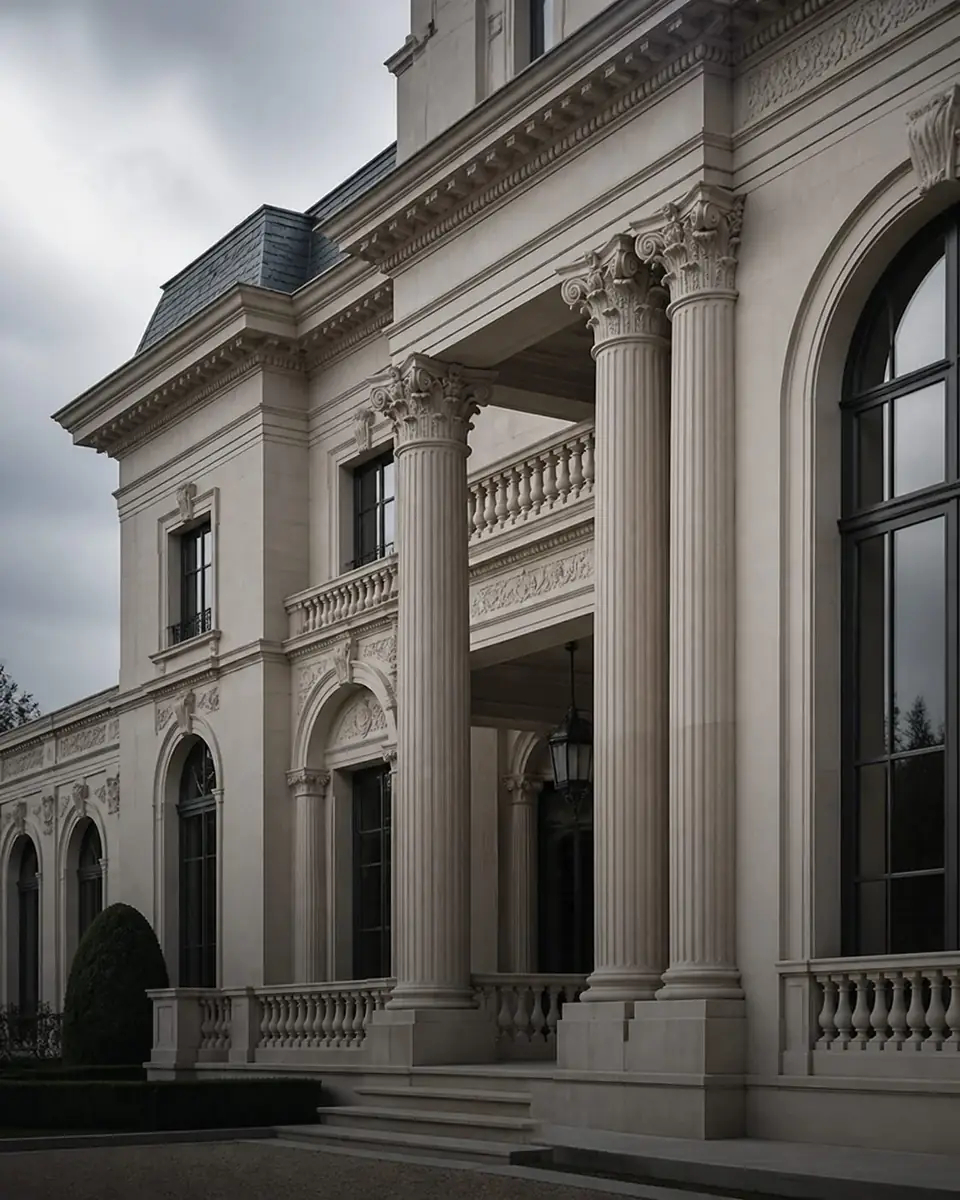
Treat visible components as one proportioned package with coordinated profiles, joints and material range.

A component schedule connects every carved or profiled piece with its elevation, level, opening and installation position.
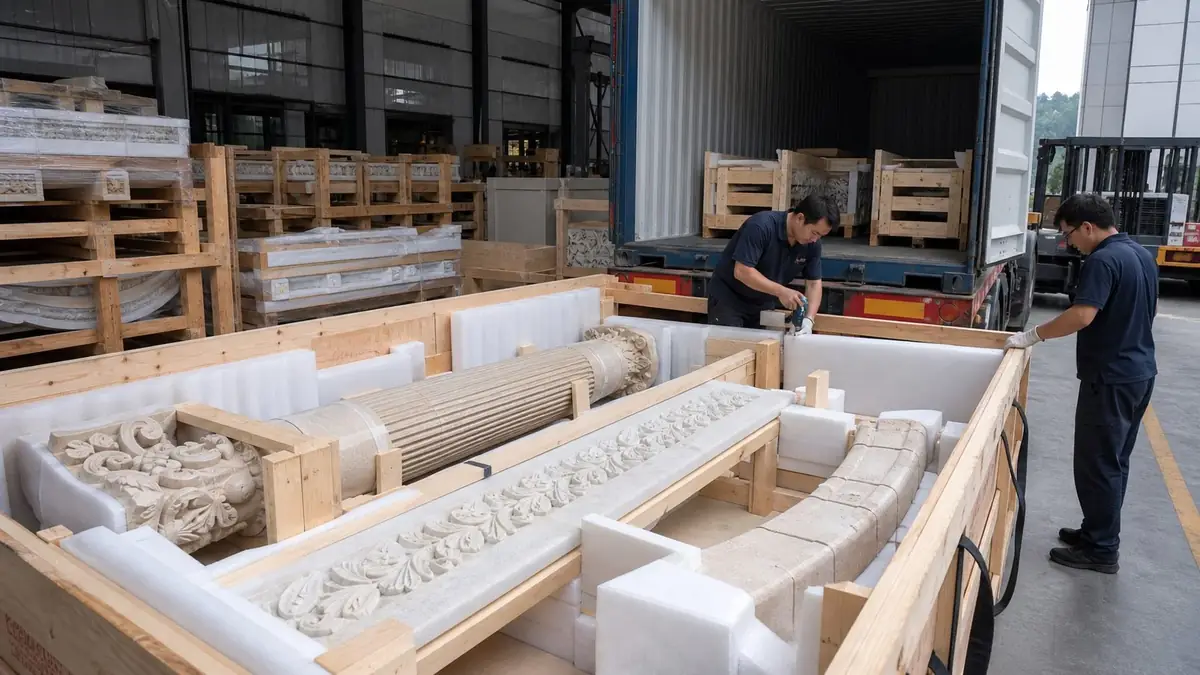
Crates can be planned around elevation zones, site access and the contractor's preferred installation sequence.
Concept and process illustrations — not completed client projects.
Programme and delivery risks
Quality focus
Project workflow
Each approval and inspection point is adjusted to material, geometry, quantity, artwork and the responsibilities in the actual contract.
Separate the stone fabrication package from local structure, waterproofing, anchorage, installation and other trade responsibilities.
Check drawings, schedules or models, material, finish, quantities, interfaces, destination and approval status.
Align samples, profiles, first pieces, artwork, models or mock-ups before related production is released.
Combine cutting or CNC production with hand carving, surface finishing and component identification.
Check the project-defined dimensions, appearance, interfaces and agreed handover records at useful stages.
Protect and sequence the work with weights, packing lists and assembly references for local site teams.
Relevant product categories
Each category page explains design inputs, materials, quality checks, fabrication route and quotation questions.
Related planning guides
These planning scenarios show possible scope and workflow; they are not completed client projects.
 New York, United States
Light beige limestone; final quarry and range subject to approval
Los Angeles, United StatesCream limestone for carved and profiled exterior components
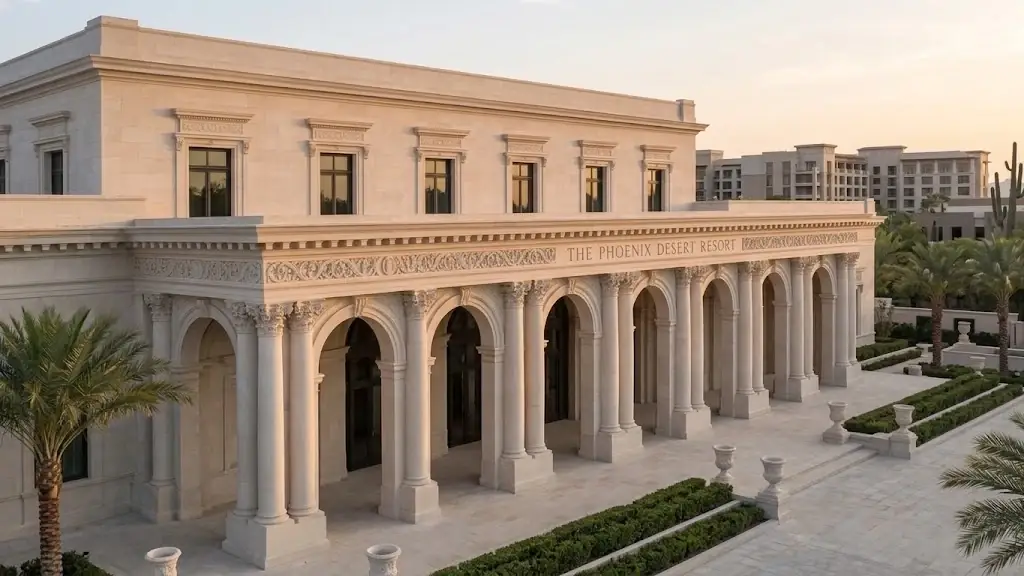 Phoenix, United States
Buff sandstone; range, bedding and exterior suitability subject to testing and approval
Application FAQ
Practical answers for architects, developers, contractors, artists, consultants and procurement teams.
A coordinated scope can include porticos, columns, surrounds, cornices, bands, balustrades, stairs, reliefs and selected landscape pieces. The drawings still need clear interfaces with structure, waterproofing, windows, doors and local installation design.
Pieces can be identified by elevation, floor, opening and position. Opening schedules, setting-out drawings, piece marks and zone-based packing reduce confusion during installation.
Early review is useful when profiles, block sizes, curves, carving, joints, piece weights or logistics may affect the design. Production should begin only after the applicable information and approvals are clearly released.
The team can develop fabrication geometry, component information and production models within the agreed scope. The project architect and qualified local engineers remain responsible for design intent, structure, anchorage, waterproofing, code and installation approvals.
Send drawings or a 3D model, overall and component dimensions, quantities, material and finish preference, destination, site access information and the target approval and delivery programme.
Programme depends on drawing status, samples, stone availability, quantity, carving complexity, model approvals, trial assembly and shipping. A project-specific schedule follows technical review.
Yes. The appropriate approval reference may be a material range, finish sample, full-size profile, mock-up, first piece, relief master or artist-approved model depending on the work.
Local installation is normally performed by the buyer's qualified contractor under local engineering and code requirements. The fabrication package can include piece marks, weights, packing sequence, assembly references and remote coordination.
Your actual application
We will identify the suitable product scopes, missing information, approval route and a project-specific fabrication basis.