Review
Check drawings or models, material, dimensions, quantity, interfaces, destination and approval route.
Project-based stone fabrication from Hui'an, Fujian
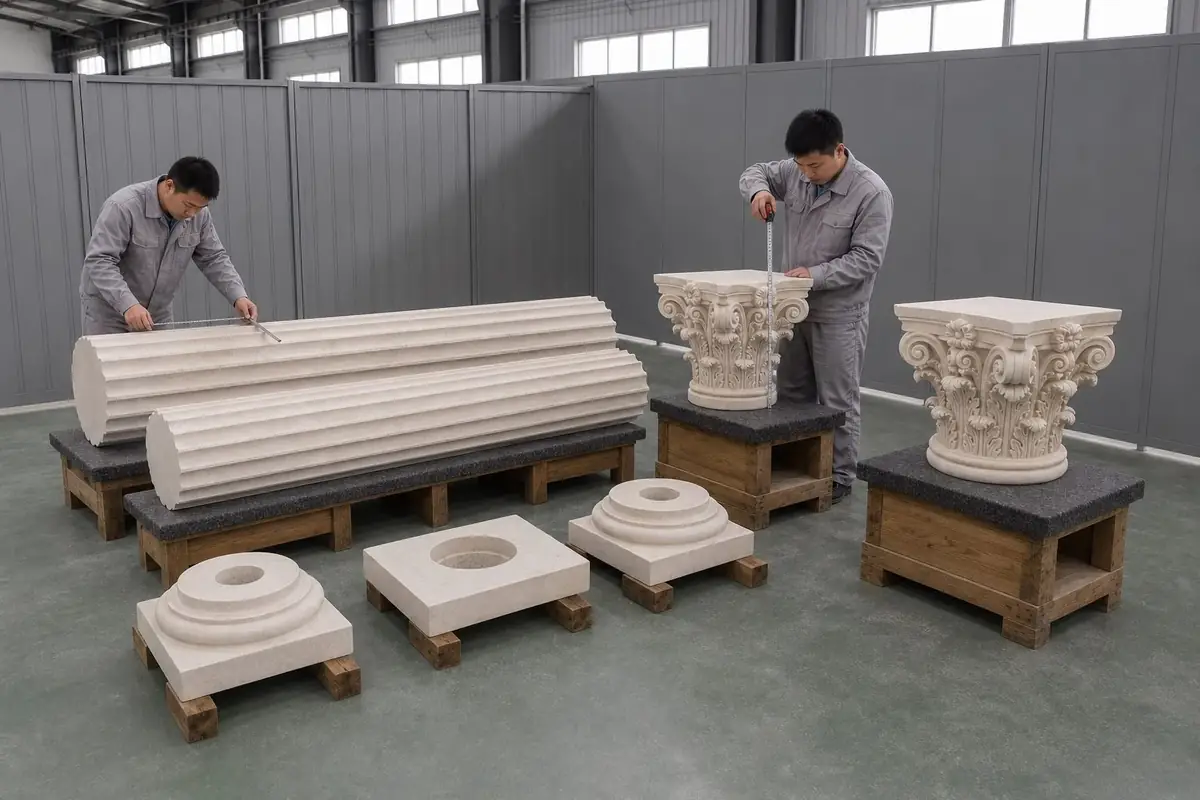
Architectural stone components
Complete column systems can be developed as coordinated bases, shafts, capitals, abaci and adjacent mouldings rather than isolated decorative pieces. Boda Stone manufactures custom stone columns and capitals from approved project drawings, models and references for international delivery.
Review order size, samples and prototypes before preparing files.
Visual project guide
Compare purpose-made visualizations before reviewing fabrication scope, material and coordination requirements.
Shafts, bases, capitals and abaci are reviewed as one coordinated column system after fabrication.
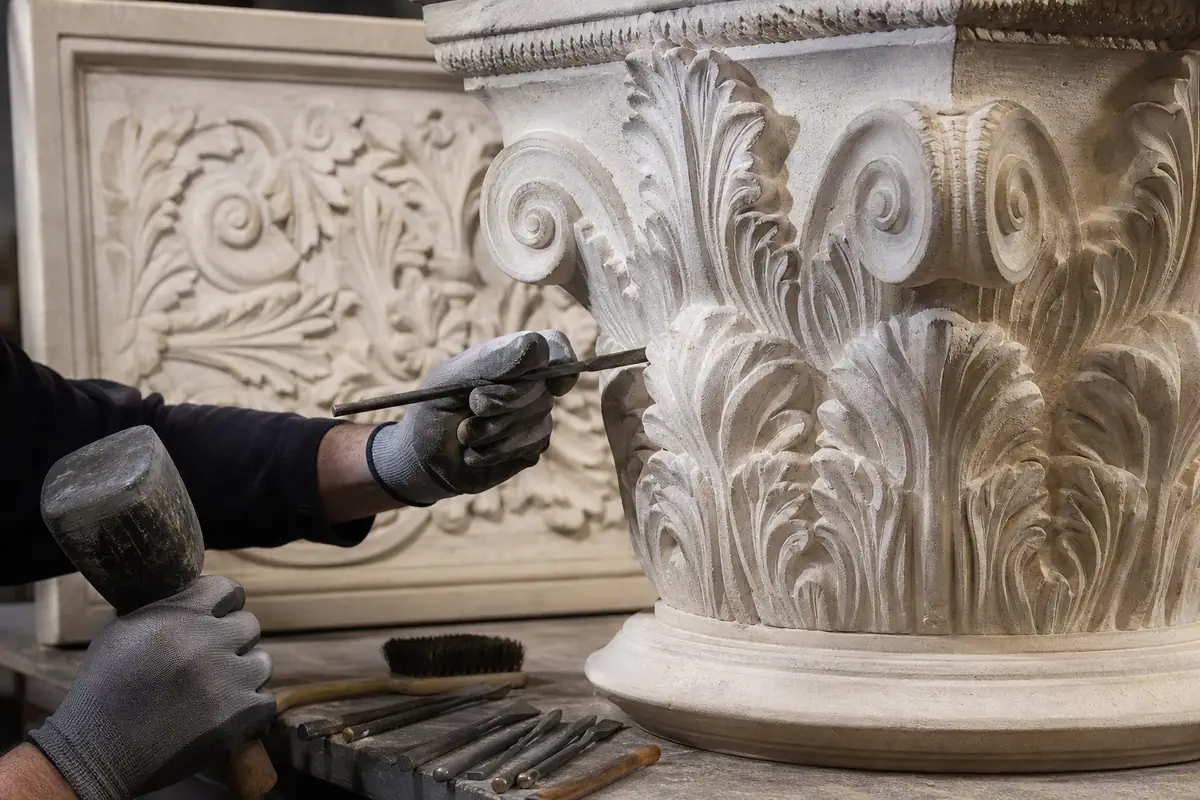
Hand refinement controls ornament depth, crisp edges, tool character and the transition from machined geometry to finished carving.
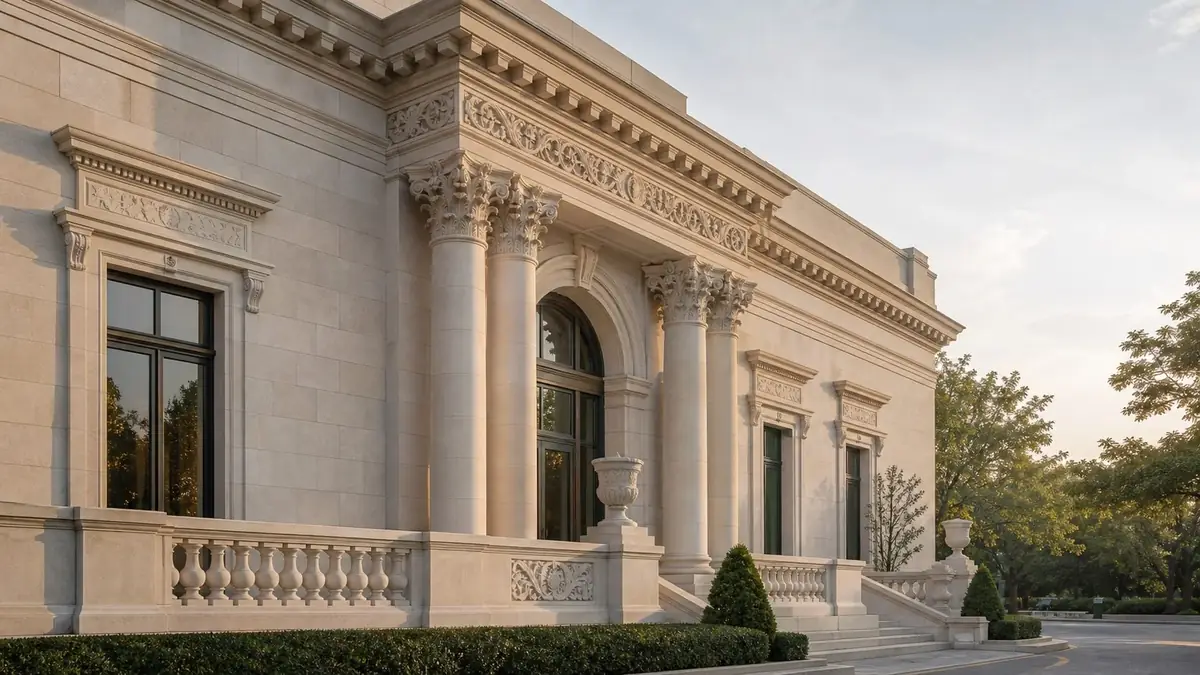
Component geometry is developed as part of the full elevation, not as isolated decorative pieces.
Concept and process illustrations — not completed client projects.
Quick project answer
Complete column systems can be developed as coordinated bases, shafts, capitals, abaci and adjacent mouldings rather than isolated decorative pieces. The quotation and production route are based on reviewable dimensions, geometry, quantity, material, finish, destination and approval requirements.
Fabrication scope
Final dimensions, tolerances, samples and documentation are confirmed against the approved project files rather than assumed from a generic catalogue item.
Project workflow
The sequence is adapted to the specific geometry, material, artistic control, quantity and destination.
Check drawings or models, material, dimensions, quantity, interfaces, destination and approval route.
Prepare component geometry, schedules, profiles or production models where the project requires them.
Align material range, finish, critical samples and artistic or architectural references.
Combine machine cutting or CNC roughing with skilled hand carving and surface finishing.
Inspect project-defined dimensions, profiles, interfaces, finish and piece identity before packing.
Protect, number and pack pieces with the records needed for unloading and local installation.
Material options
Typical control points
Related planning guides
These planning scenarios show possible scope and workflow; they are not completed client projects.
 Los Angeles, United States
Cream limestone for carved and profiled exterior components
 Houston, United States
Warm beige limestone with fine-honed primary surfaces
 Philadelphia, United States
Light grey-beige limestone with fine-tooled carved surfaces
Product FAQ
Practical commercial and technical answers for architects, contractors, artists and procurement teams.
Yes. Bases, shafts and capitals can be divided around visual joints, stone block availability, shipping weight and lifting access. Each piece is identified to the approved column schedule.
Yes. Capital geometry can be developed from detailed drawings, approved references, physical samples or a reviewed 3D model. The approval route is agreed before carving begins.
Cost depends on stone, overall size, quantity, geometry, carving detail, finish, model or drawing quality, testing, packing and destination. A reliable quotation requires project dimensions and an approved or reviewable design basis.
Architectural drawings, schedules, profiles and 3D models are preferred. Photographs can support style and detail references, but dimensions and interfaces still need an approved project basis.
Programme depends on approvals, stone availability, quantity, carving complexity, trial assembly and shipping. Boda Stone confirms a project-specific production window after reviewing the complete enquiry package.
Yes. Components can be numbered, protected and packed in export crates with packing lists, weights, component references and loading records appropriate to the agreed scope.
Common applications
Project enquiry
Include dimensions, quantity, material and finish preference, destination and required delivery window. We will reply with the questions needed for a fabrication review.