Independent bridge-type block saws
Separate machines with representative 3.2 m, 2.8 m and 1.8 m blades for primary block breakdown and lengthwise slab cutting.
Project-based stone fabrication from Hui'an, Fujian
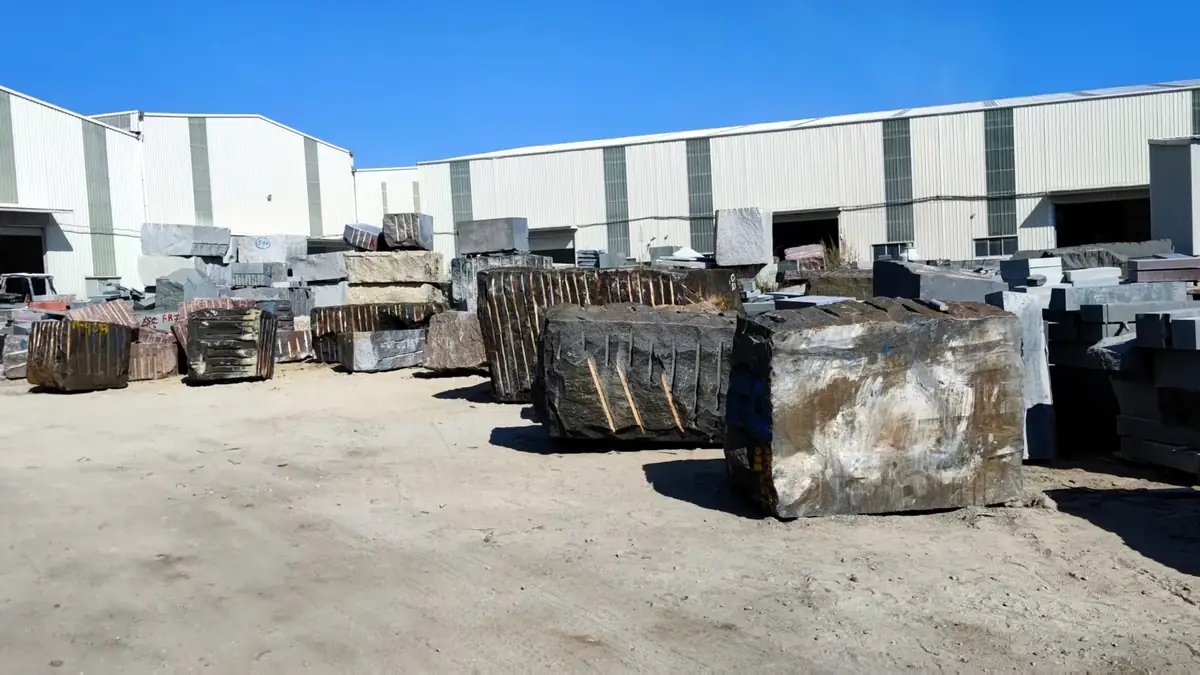
Hui'an, Fujian · Custom stone fabrication
Drawing review, CAD and 3D development, machine fabrication, skilled hand carving, project-defined inspection and export packing for architectural stone and monumental sculpture.
Production scope
The production scope focuses on shaped, profiled, curved and carved natural stone rather than generic flat stone supply. Typical packages include facade components, columns and capitals, cornices, surrounds, arches, relief carving, special-shaped stone and large sculpture developed from approved project information.
Photographed at Boda Stone
These are real photographs from the factory and project-control process: the workshop entrance and yard, the CNC production floor, William's inspection review, component layout and export loading.
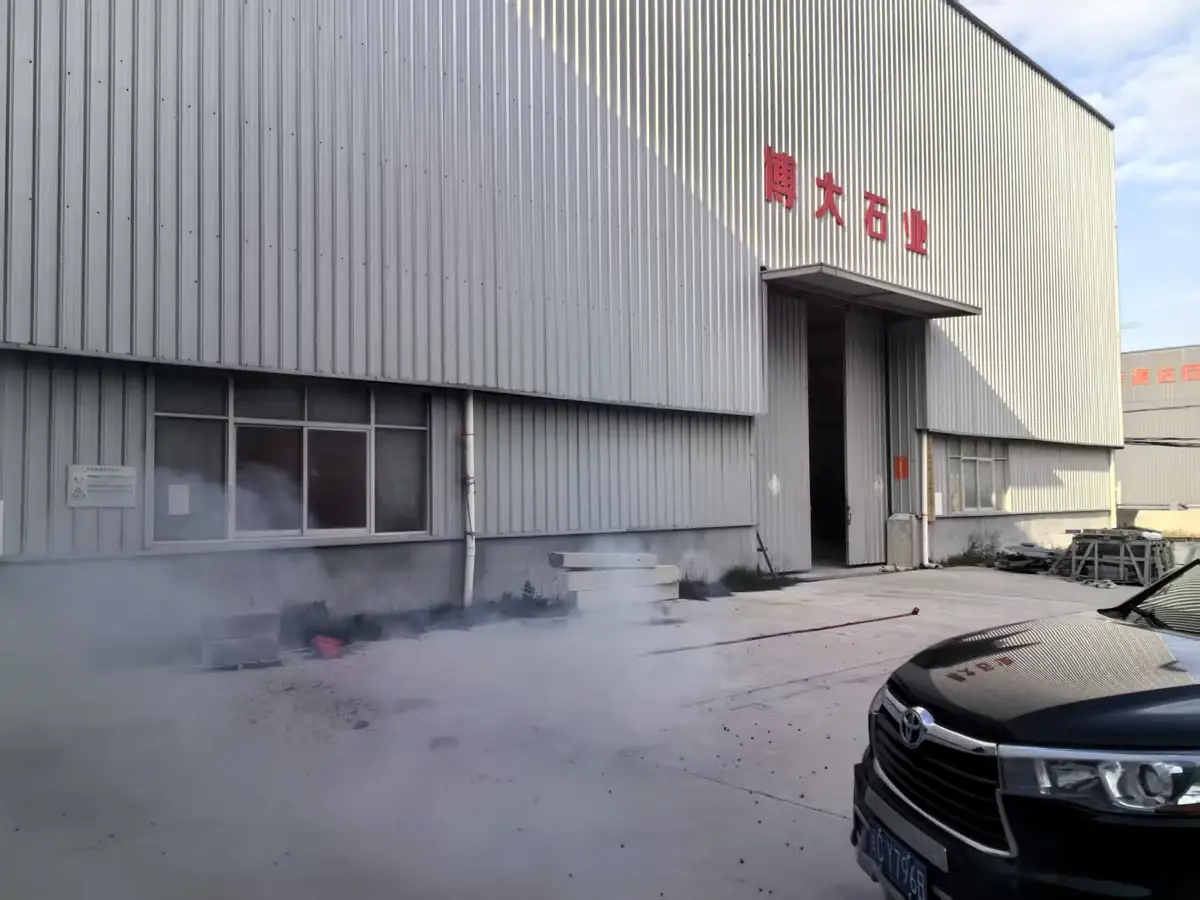
The Boda Stone workshop entrance in Hui'an, Fujian.
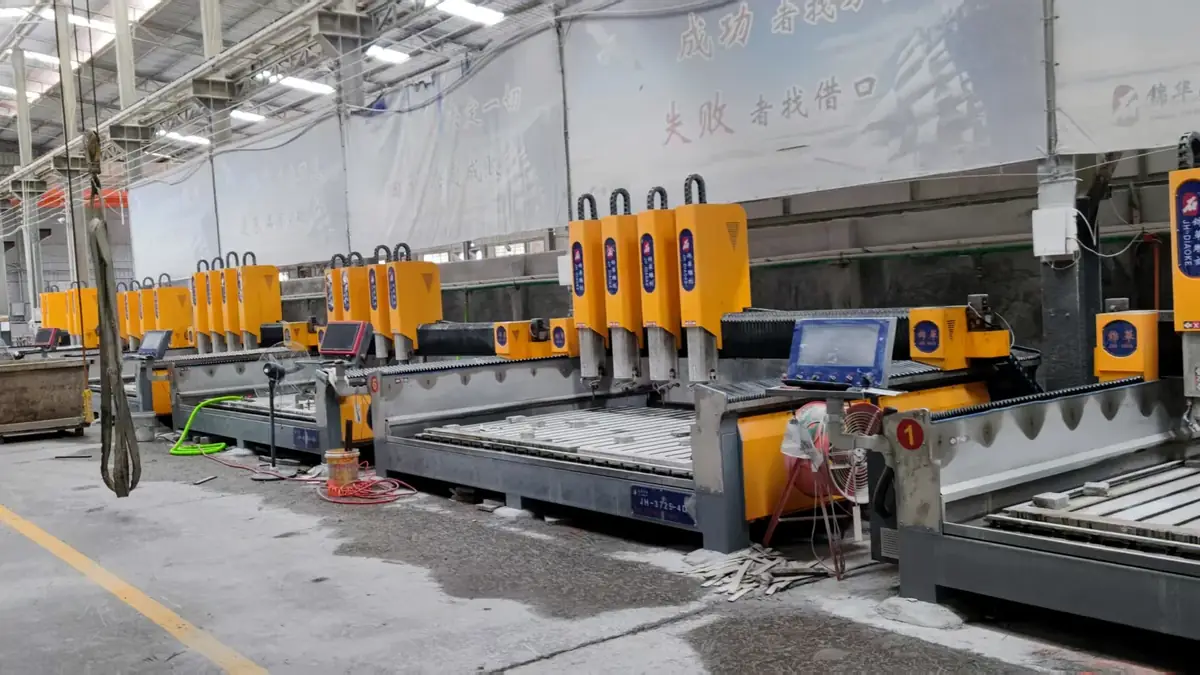
A real production-floor view of the multi-machine CNC carving line.
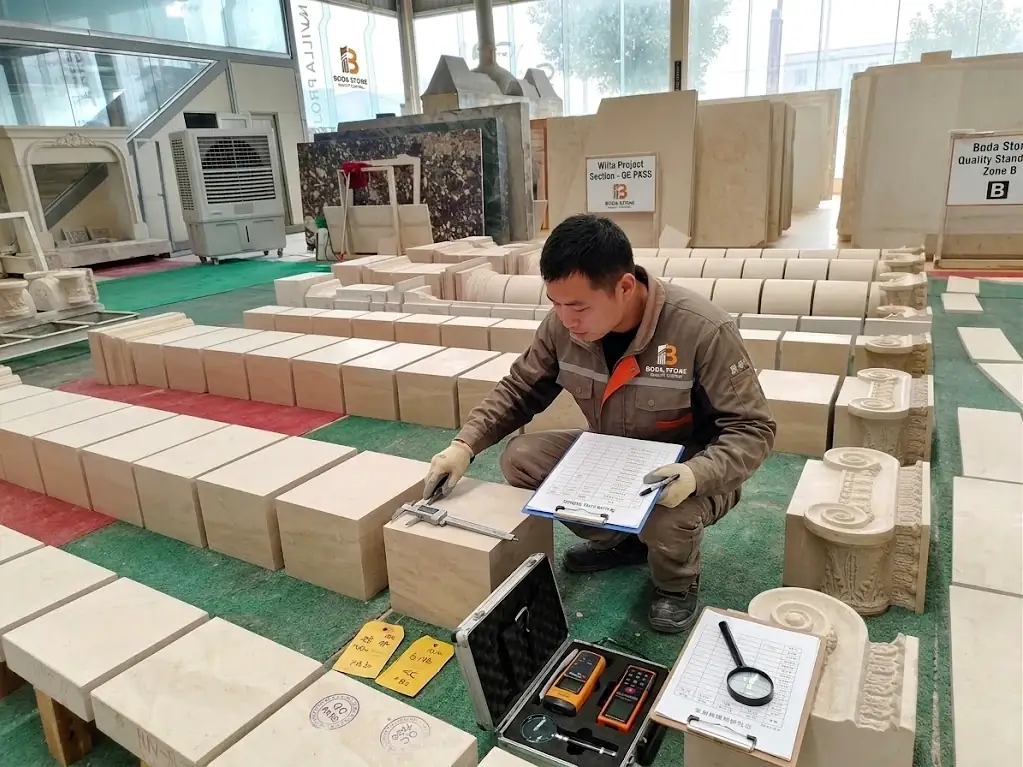
William Jiang reviews a component dimension against the inspection record.
Inspection to shipment
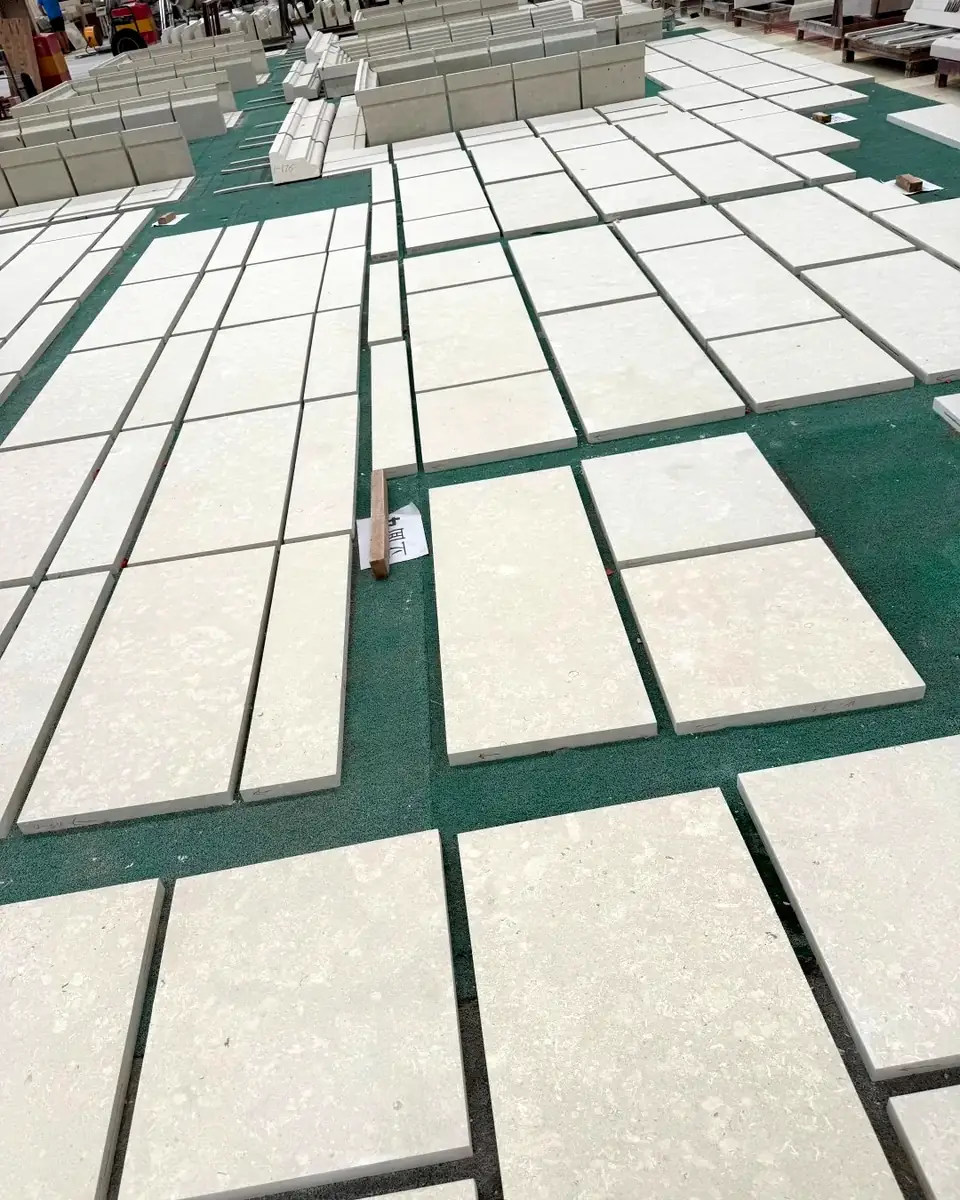
Pieces are viewed together so colour, veining and finish can be assessed across the set.
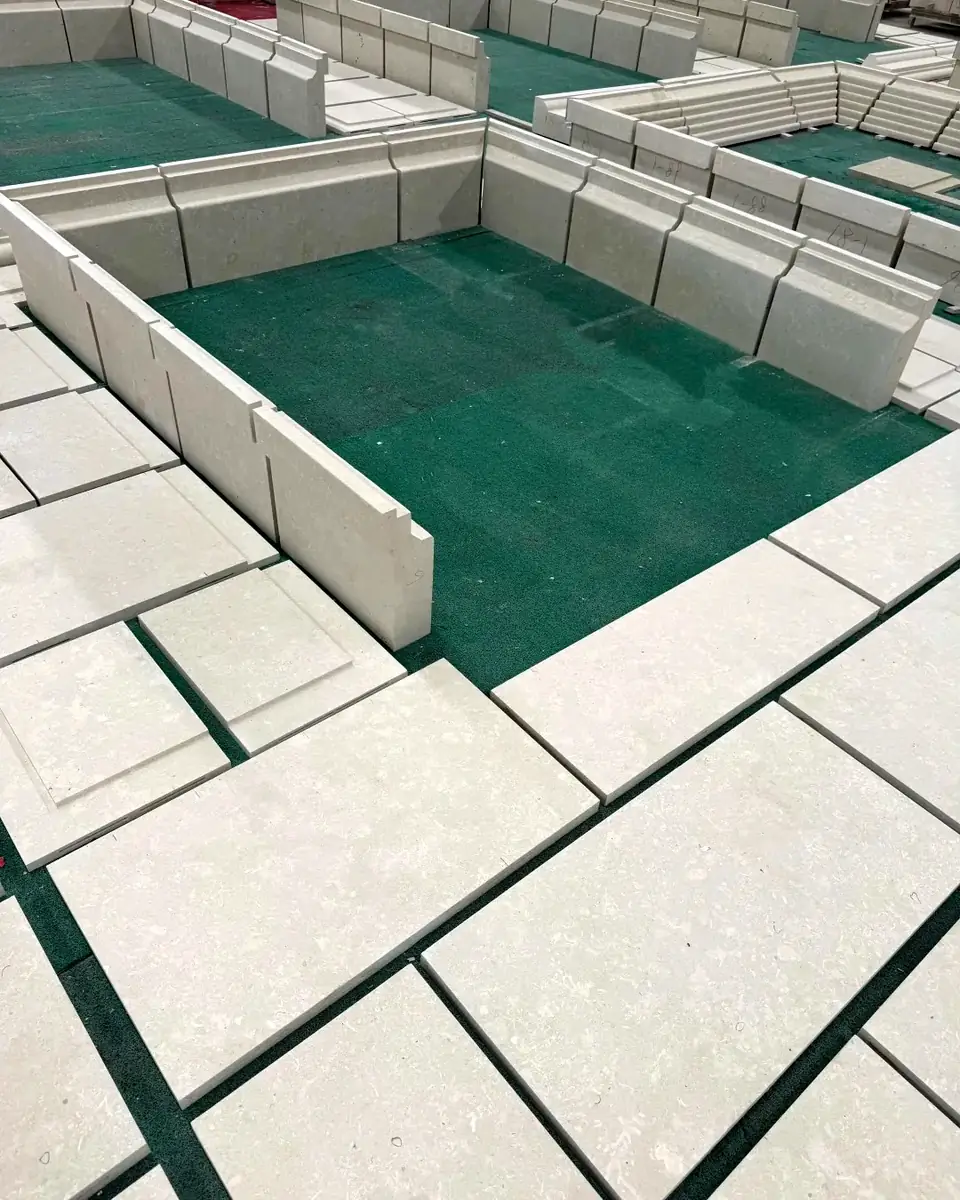
Critical wall and trim interfaces are positioned before packing to review fit and returns.
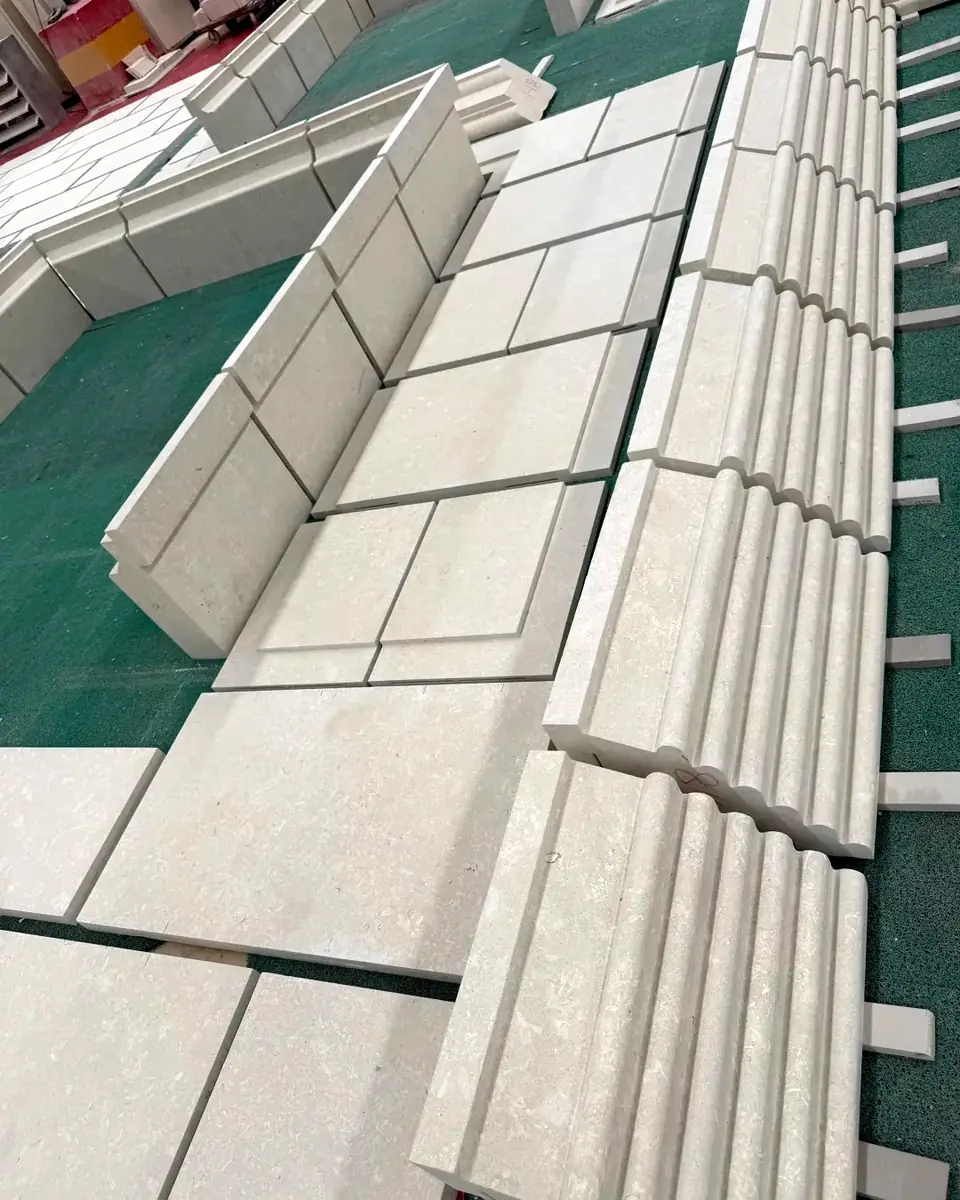
Mouldings, panels and handwritten piece marks are checked as one coordinated sequence.
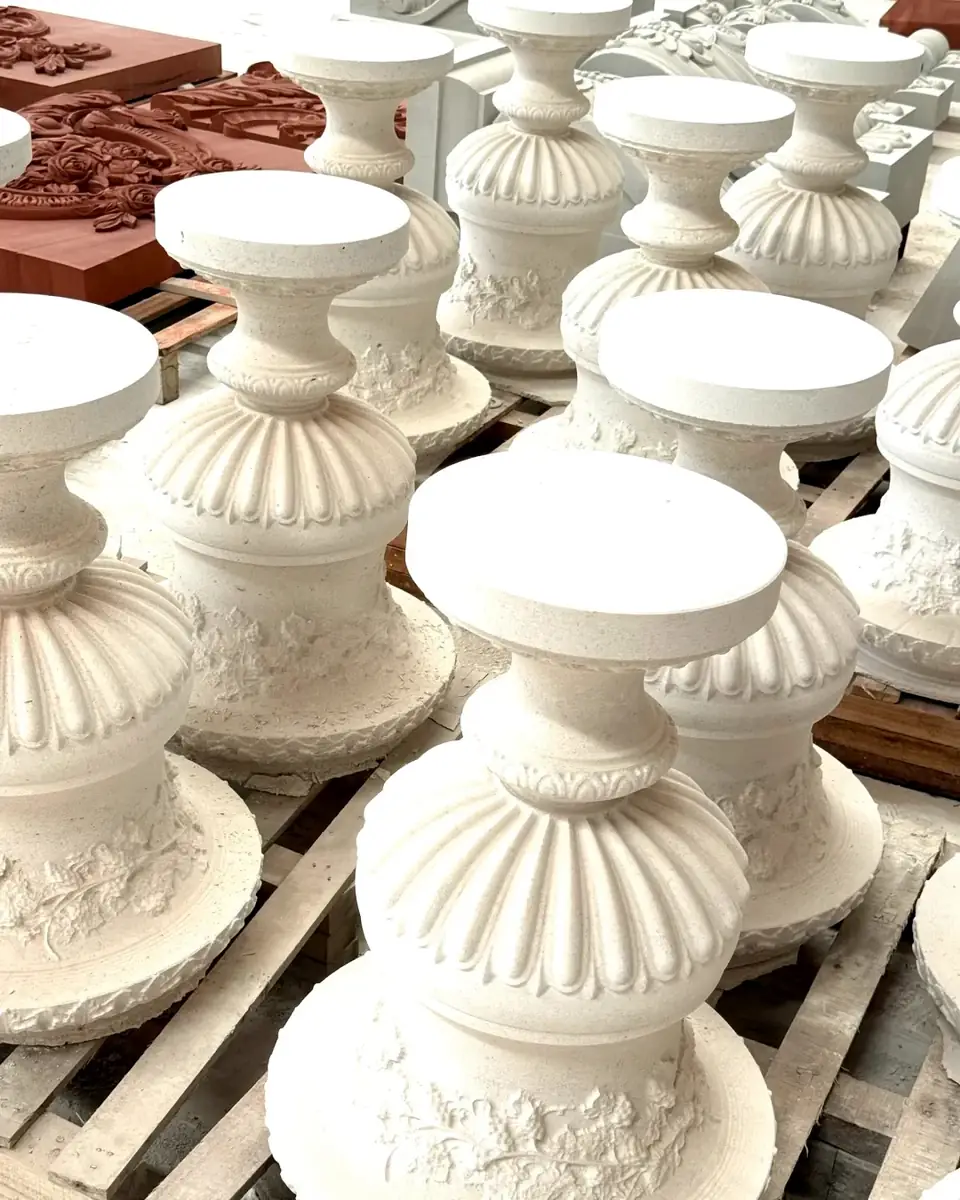
Repeated carved components are grouped for a final visual review before protection and packing.
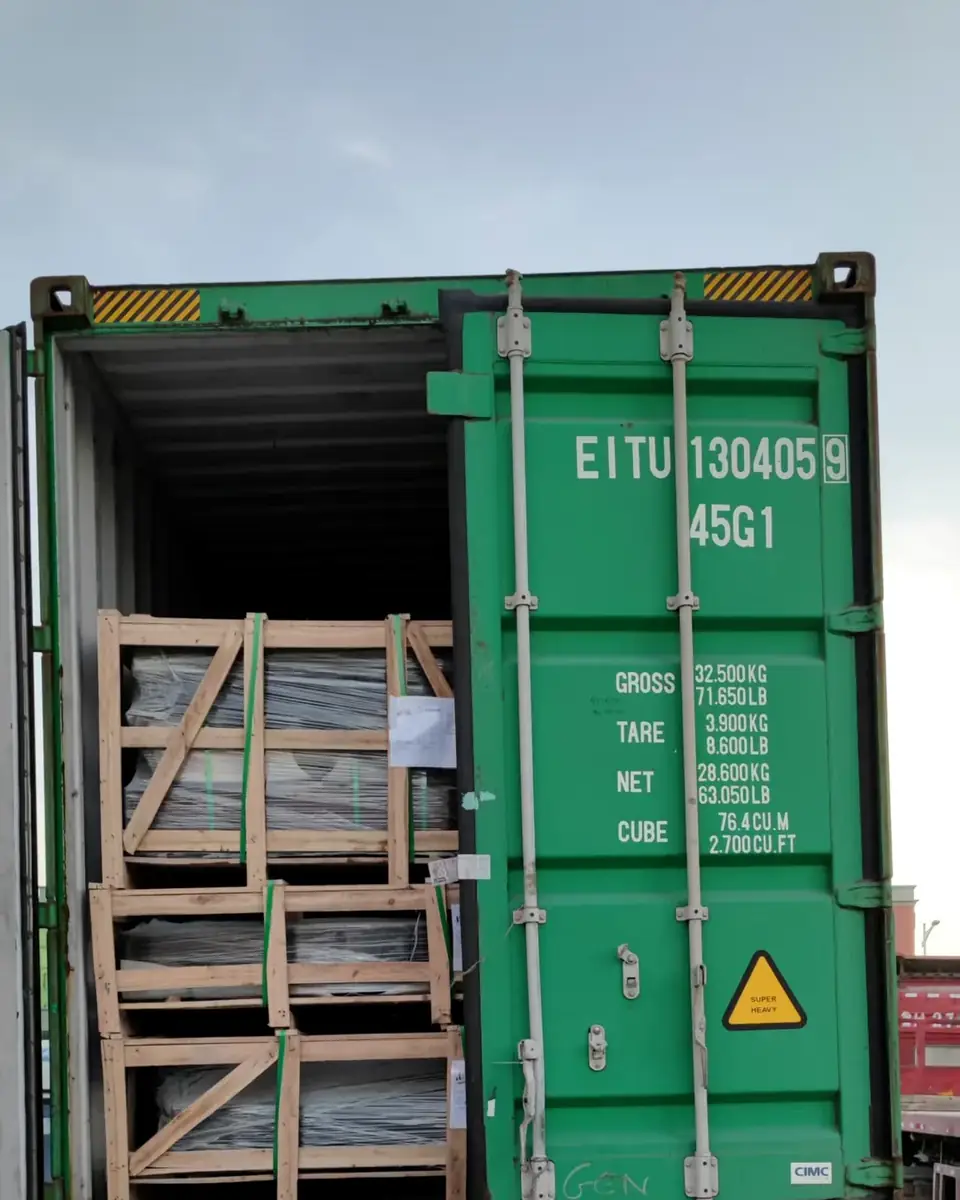
Wrapped, timber-framed units are loaded with their crate and shipment references visible.
Real factory photographs · image adjustments are limited to crop, orientation, colour and web compression.
Zone-by-zone production
Raw blocks, machine work, manual refinement, trial assembly and packing move forward as separate stages. The images intentionally do not mix machines with hand work, finished components or packing.
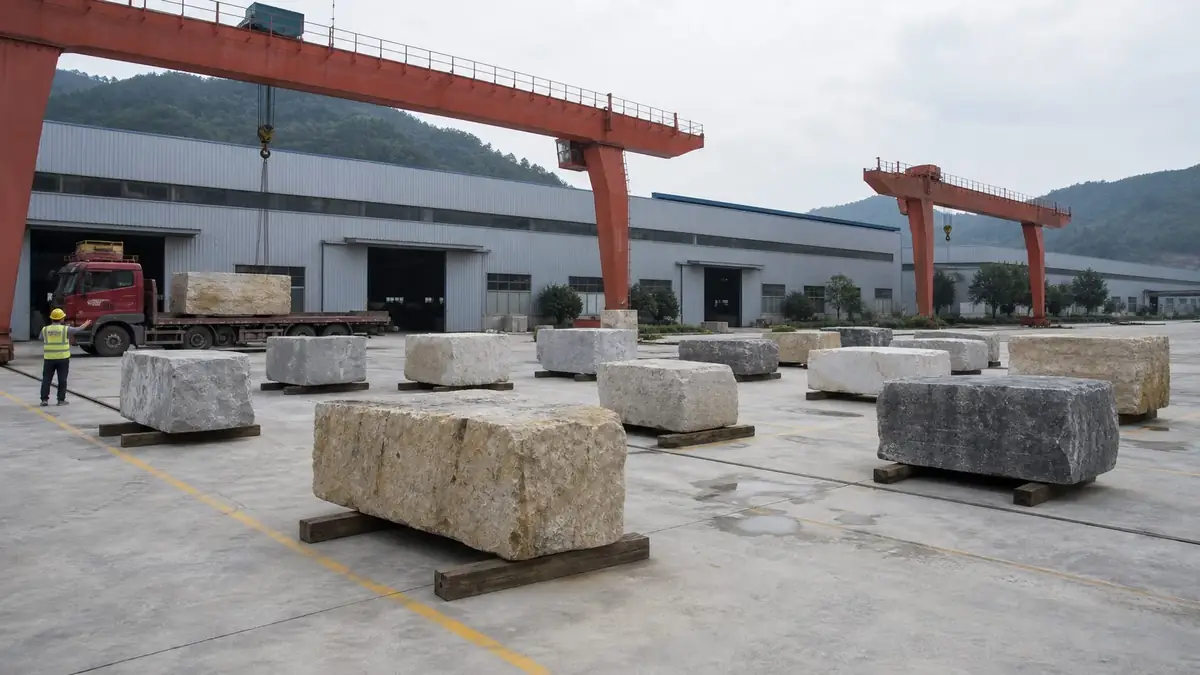
Incoming quarry blocks remain in a dedicated yard before the approved block-cutting plan is released.
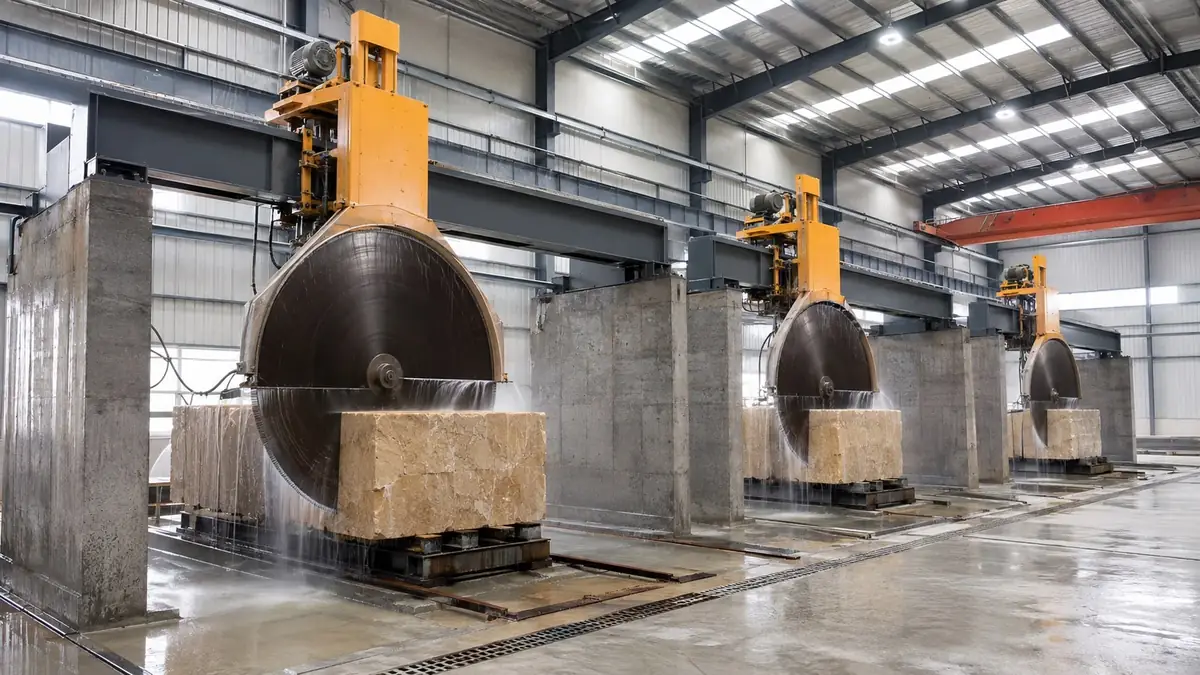
Each central saw head is carried by a low moving bridge running along independent tracks on two concrete side walls; blocks rest on low supports inside the separate cutting bays.
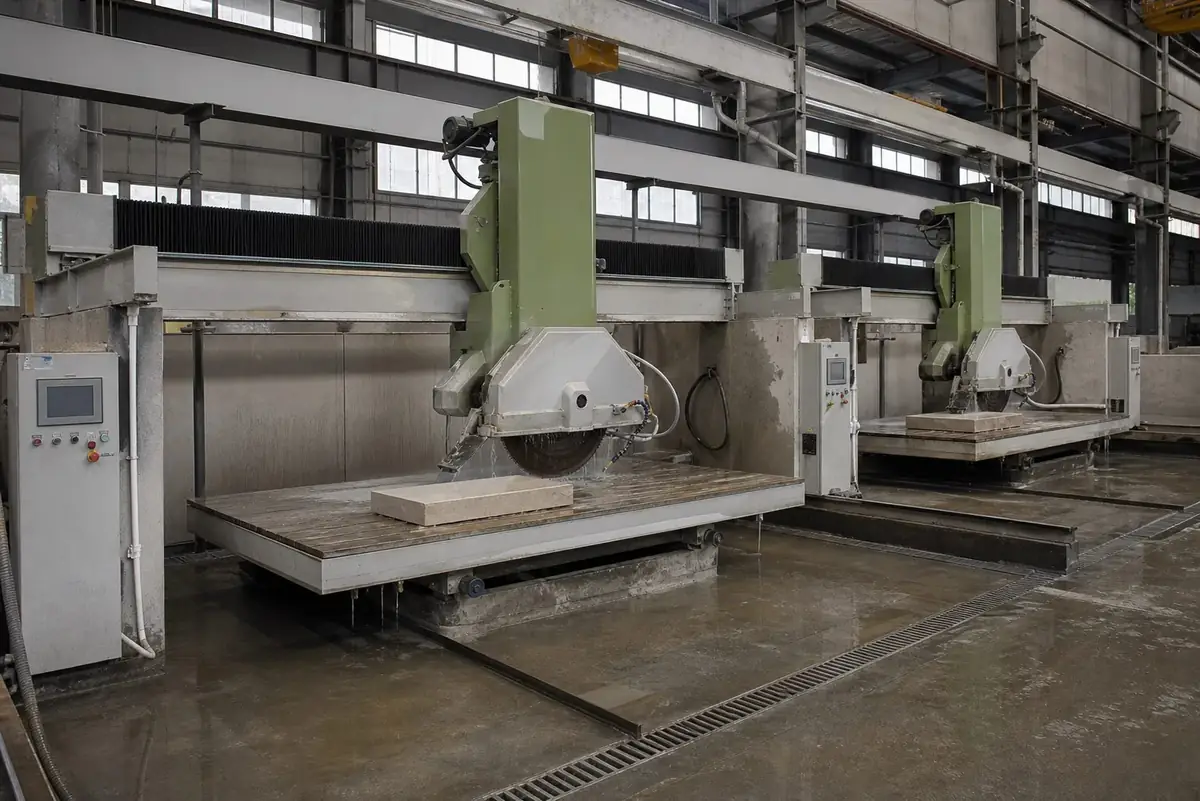
Smaller blanks are accurately sized on two separate bridge-saw tables after primary cutting.
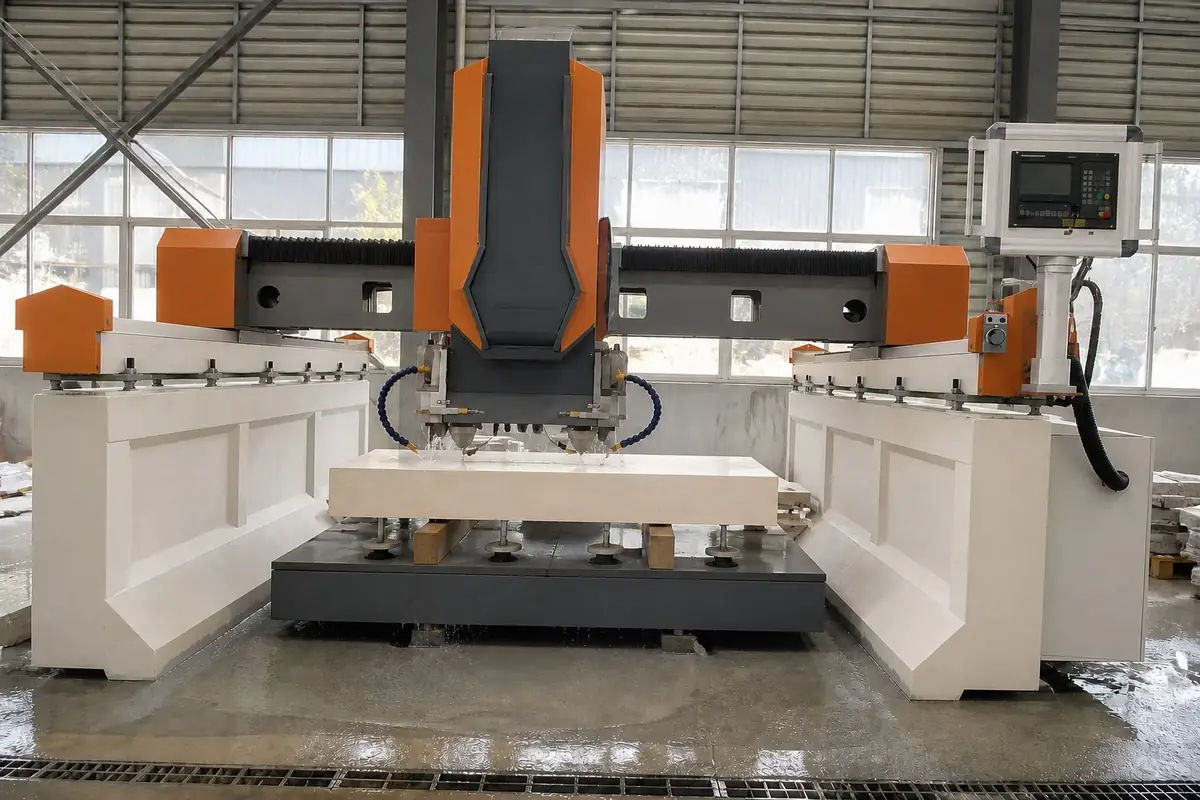
A dedicated central-head CNC profiler develops repeatable cornices and special-shaped sections from CAD data or an approved full-size profile.
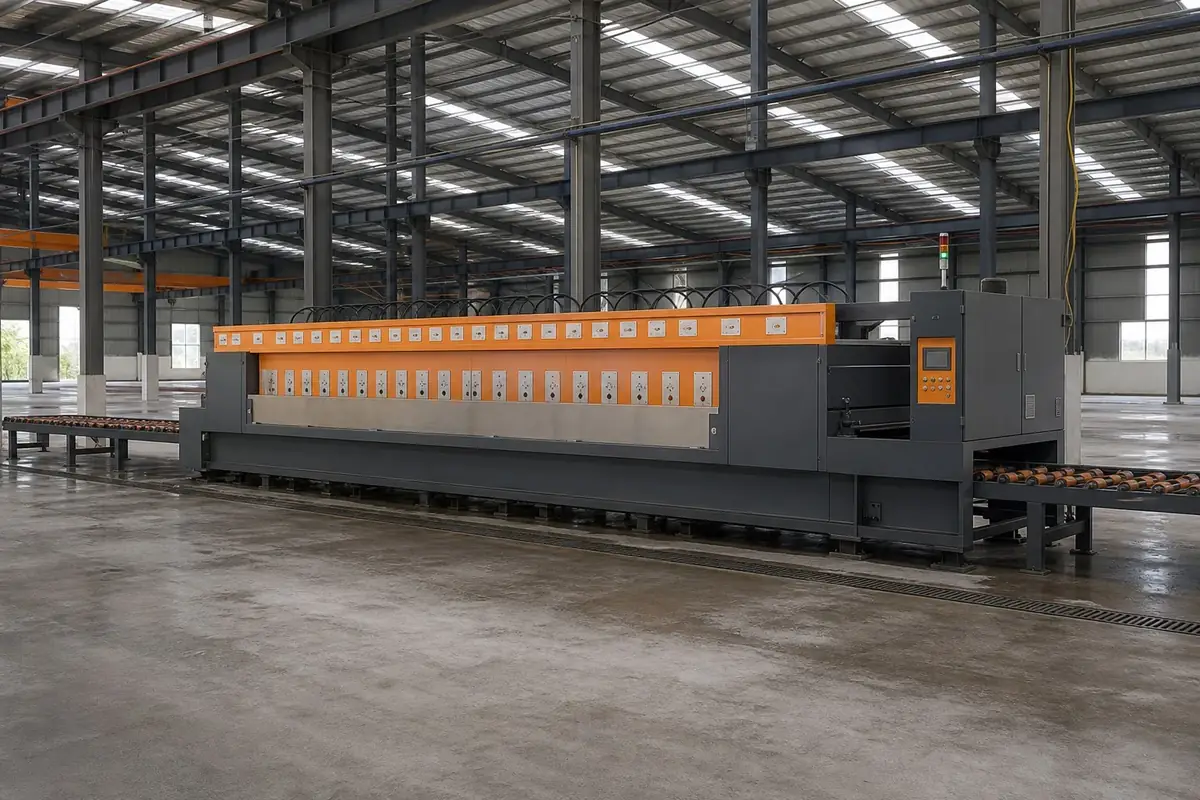
The long enclosed body contains the conveyor and sequential water-fed polishing heads; from the aisle, only the guarded machine, top services, control cabinet and empty end rollers are visible.
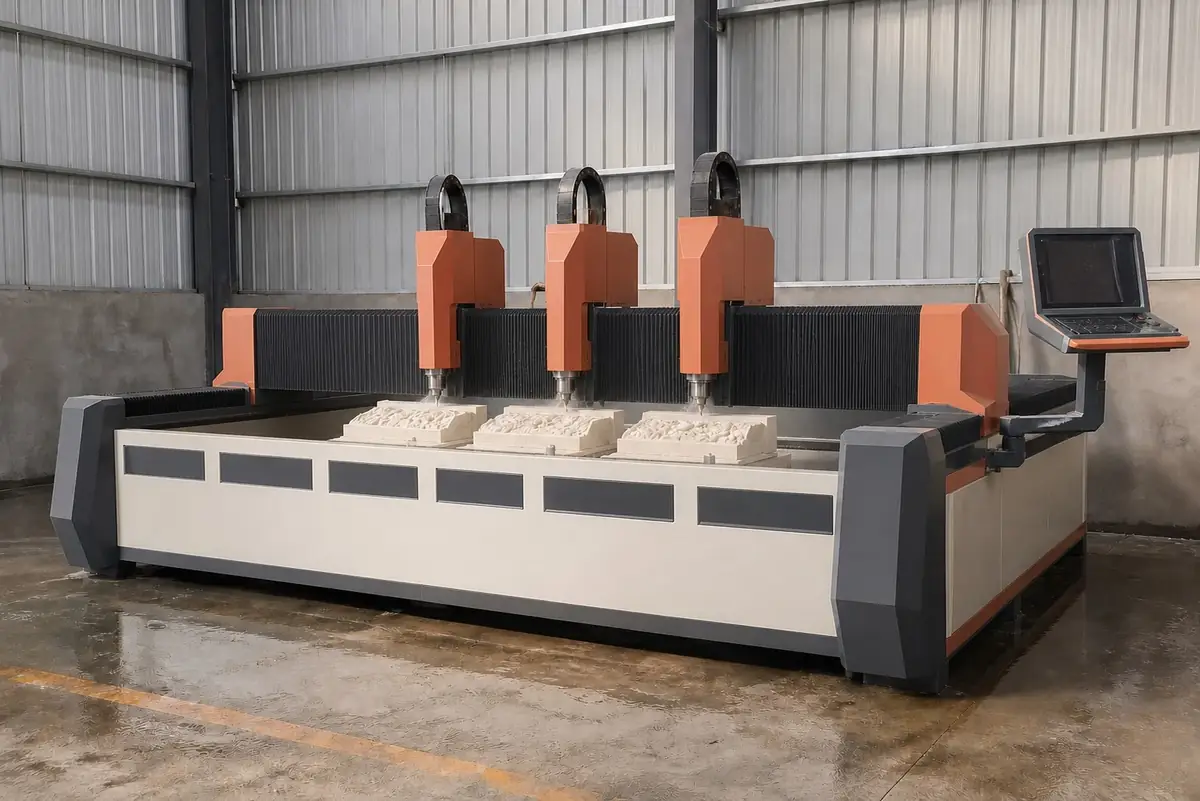
Multi-head bridge machines support repeat relief work and routine CNC roughing before separate hand refinement.
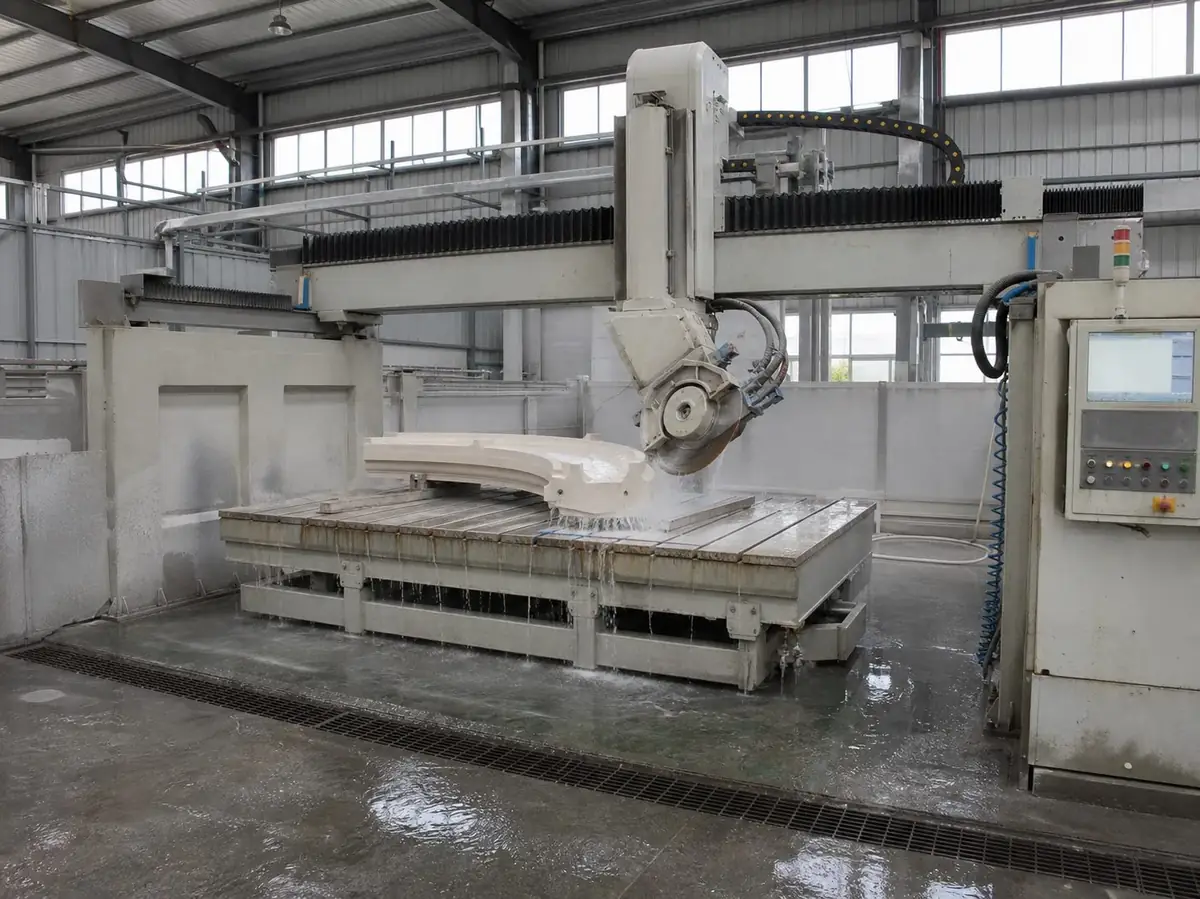
The larger five-axis machine combines angled cutting and machining for complex architectural geometry.
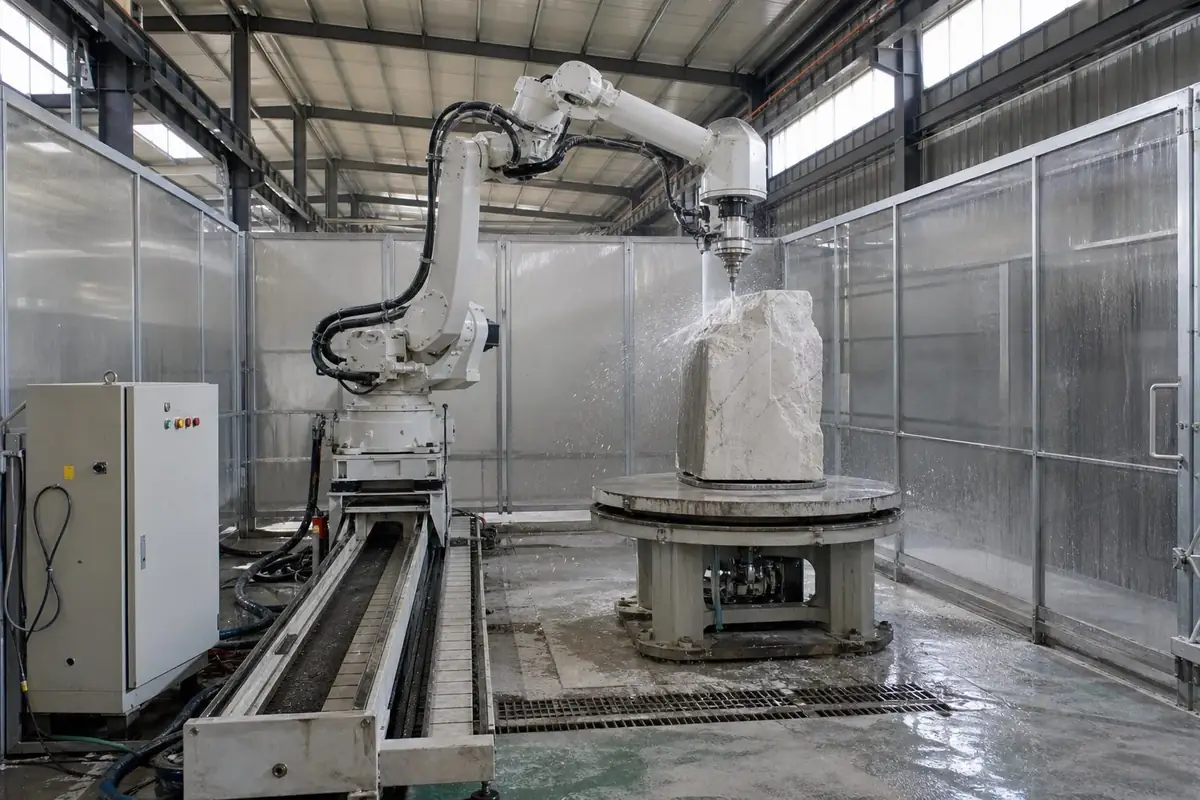
Multi-face sculptural roughing is contained in a protected wet-machining cell.
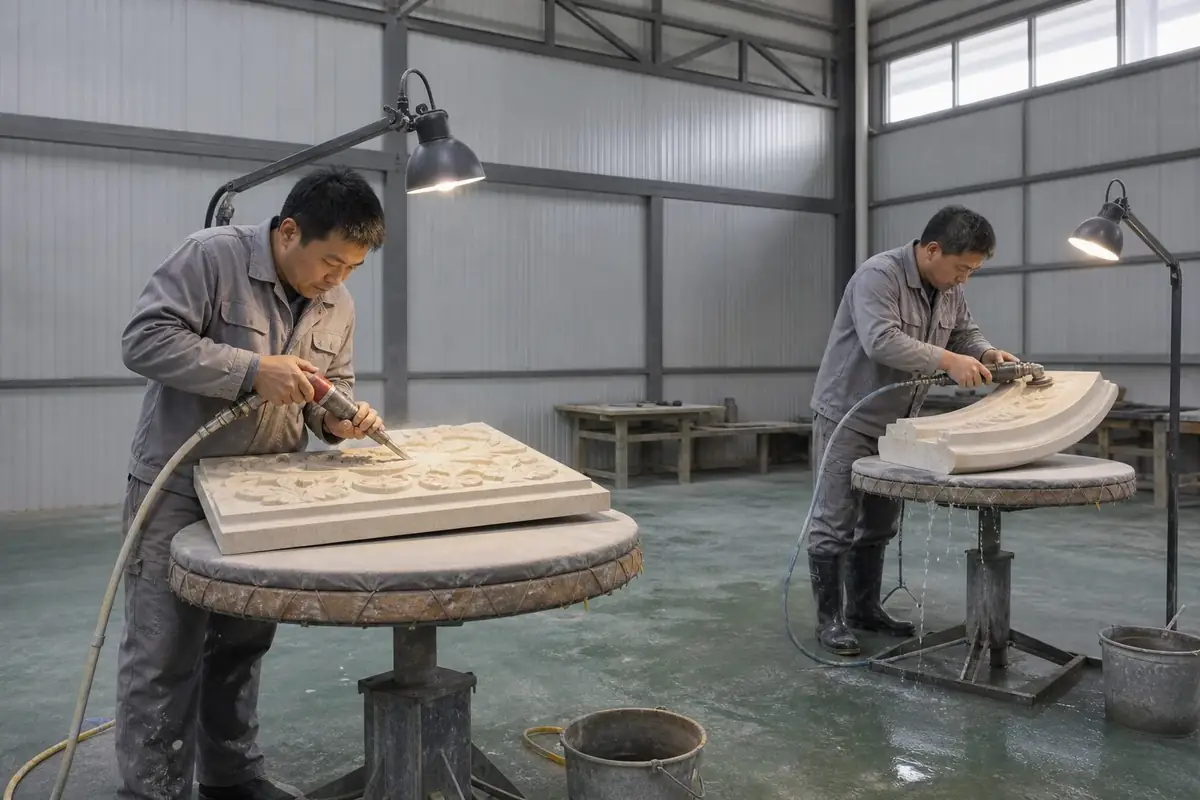
Only after machine work do pieces move to hand shaping, wet polishing and carving refinement.
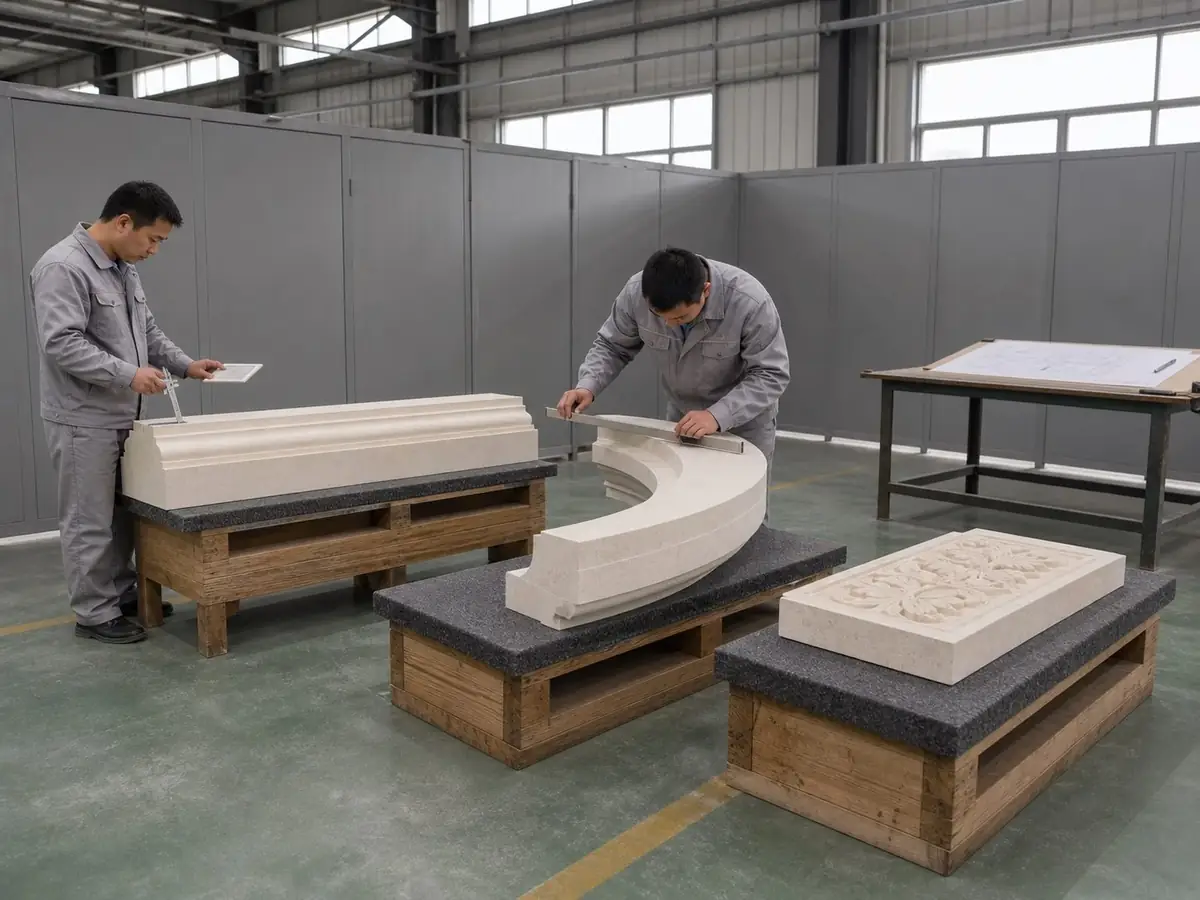
Dimensions, profiles, finish references and controlled interfaces are checked away from active machines.
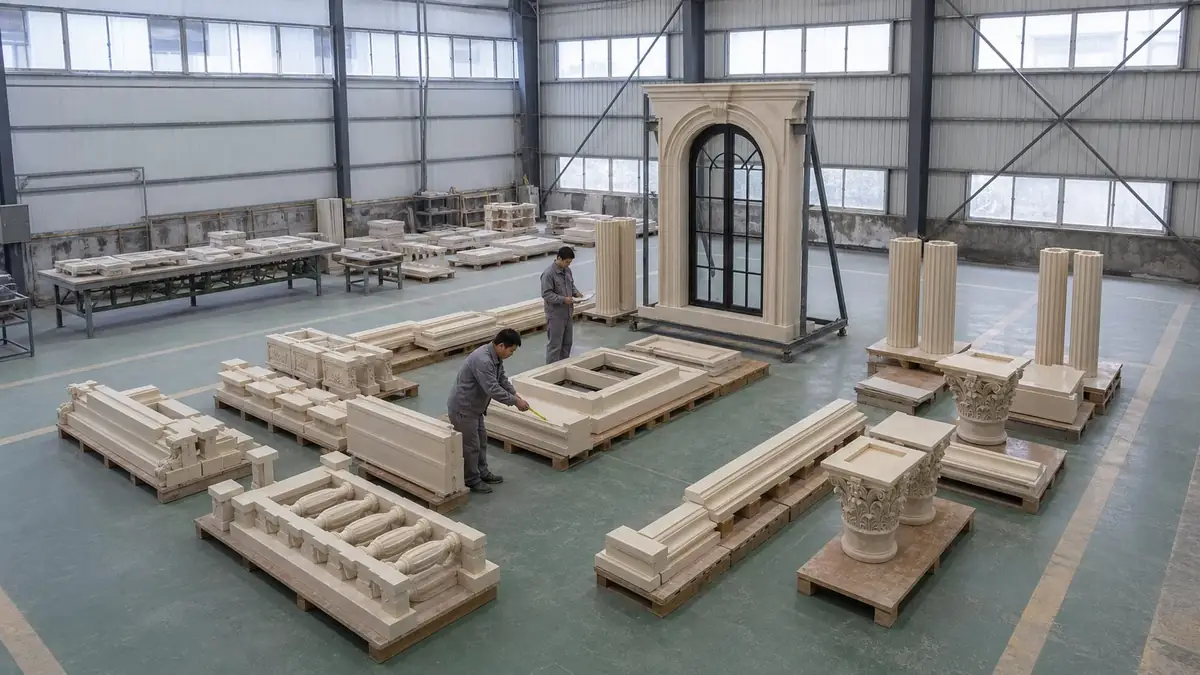
Critical sets are arranged with clear aisles to verify joints, sequence and component identity.
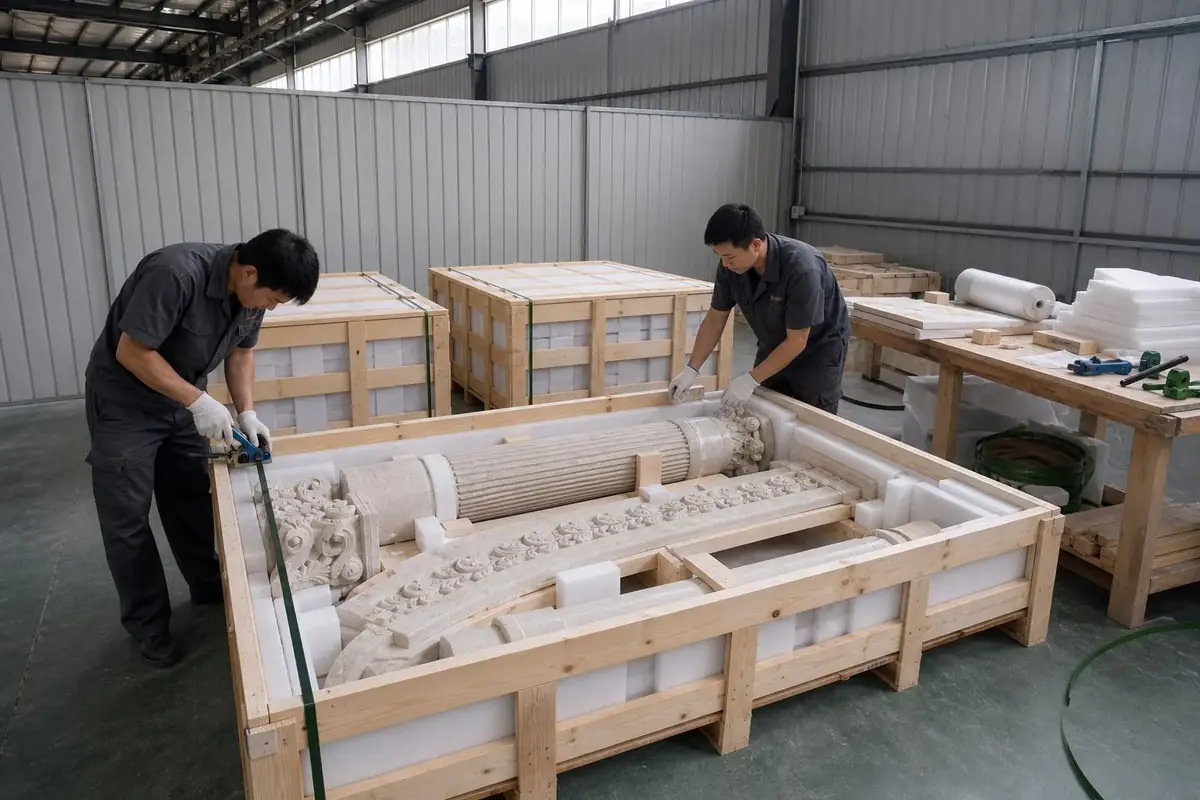
Released components enter the final isolated area for foam protection, timber blocking, strapping and crate control.
Process illustrations based on the documented Hui'an workflow and equipment; not completed-project photographs.
Core machine inventory
The production base has 40+ pieces of production and support equipment. The 14 core fixed machines listed below follow the route from heavy bridge cutting to accurate sizing, profiling, polishing and CNC carving; support equipment and the separate manual, inspection and packing areas complete the wider site inventory.
Separate machines with representative 3.2 m, 2.8 m and 1.8 m blades for primary block breakdown and lengthwise slab cutting.
600 mm blades for accurate secondary cutting, sizing and smaller production blanks.
Repeated cornices, mouldings, bands, edges and special-shaped architectural profiles.
Controlled, even surface finishing for suitable flat and regular stone components.
Routine CNC roughing and repeat relief carving before the separate manual-finishing stage.
Larger cutting and carving work, complex curves, angled machining and special-shaped stone.
Multi-face rough carving and complex sculptural geometry from reviewed digital models.
Wet hand polishing, edges, curves and local transitions in the separate manual-work bay.
Nine-stage workflow
Each material stage moves into the next controlled zone; machine work, hand refinement, trial assembly and packing are not presented as one mixed factory scene.
Approved limestone, marble, granite or sandstone blocks enter the separate raw-block yard and are allocated to the project cutting plan.
Three independent bridge-type block saws break large quarry blocks into slabs or production blanks with representative blade diameters of 3.2 m, 2.8 m and 1.8 m.
Two 600 mm infrared bridge saws cut the primary material into smaller, accurately sized blanks for the next operation.
A dedicated open-bridge CNC profiling machine develops repeated mouldings, edges and architectural sections from approved digital or full-size profiles.
A long multi-head automatic line gives suitable flat and regular stone an even controlled finish before separate shaped or hand-finished work.
Five multi-head bridge-type carving machines, one large five-axis bridge machine and one seven-axis system handle roughing, repeat carving and complex geometry.
Machined pieces move to a separate manual bay for hand shaping, wet hand polishing, carving refinement and surface transitions.
Finished pieces are checked in a separate inspection area, then critical groups move to the dry-layout bay for interface and sequence verification.
Released components move to the final packing zone for foam protection, timber blocking, slatted crates, packing references and loading preparation.
Size, weight & tolerance
Maximum dimensions and weights are reviewed against quarry block availability, machine envelope, lifting equipment, container payload, transport route and site crane access. Tolerances are assigned to critical interfaces and visual conditions instead of using one unsupported number for every stone product.
Capacity & programme
Production planning capacity is up to 16 export containers per month. Committed dates depend on material, component volume, carving intensity, sample approval, trial assembly and the confirmed production schedule.
Materials & available records
Not every quarry or project supplies the same document set. Availability should be confirmed before a certificate or test is written into the specification.
Limestone, marble, granite, sandstone and travertine selected around exposure, appearance, carving detail, block size and project requirements.
Range samples, finish samples, mock-ups, first pieces, quarry or supplier information and batch photographs where agreed.
Available supplier or third-party reports can be reviewed against the specified standard; project-specific testing can be coordinated when defined before ordering.
Inspection records, piece schedules, packing lists, crate weights, loading photographs and assembly references according to the contracted scope.
Packing & delivery
Crate design, protection, weights and loading order are planned around component fragility, container limits, unloading access and the agreed installation sequence.
Factory FAQ
These answers define the review process without inventing unsupported machine limits, tolerances or certificates.
Each enquiry is reviewed as a defined fabrication package: approved geometry, material, quantity, finish, inspection points, packing and delivery sequence. The commercial offer should identify the responsible production entity and inspection route before an order is released.
Production planning capacity is up to 16 export containers per month. The committed capacity for an order is confirmed against stone availability, component size, carving complexity, approvals, trial assembly and the current project mix.
The Hui'an production base operates 40+ pieces of production and support equipment. Its documented core fixed line includes three bridge-type block saws, two 600 mm infrared bridge saws, one profiling machine, one automatic polishing machine, five standard bridge-type carving machines, one larger five-axis bridge machine and one seven-axis carving system. Four hand-held polishing machines support the separate manual-finishing area. Exact suitability is checked against the project components.
There is no responsible single figure for every product. Maximum size and weight are confirmed against available quarry blocks, machine and crane limits, container payload, transport route, site lifting access and the proposed joint strategy.
Tolerances are agreed by component and interface rather than advertised as one blanket number. Profiled architectural pieces, bearing faces, curved transitions, carving and monumental sculpture each require different control methods and acceptance criteria.
Yes. The production basis may include CAD drawings, schedules, coordinated 3D files, scans, artist maquettes and approved physical references. File quality and approval ownership are reviewed before fabrication begins.
Depending on the contract, records may include material range approval, finish samples, first-piece inspection, dimensional or template checks, dry-fit photographs, piece-mark schedules, packing lists, weights and container-loading records.
Factory visits, remote reviews and independent pre-shipment inspection can be coordinated at agreed hold points. The inspection scope, notice period, acceptance criteria and responsibility should be defined before production release.
Local installation is normally carried out by the buyer's qualified contractor under the project's local engineering and code requirements. The fabrication scope can include piece marks, packing sequence, assembly references and remote coordination.
Project-specific review
Include drawings or a 3D model, dimensions, quantity, preferred stone and finish, destination and required delivery window.