 Process illustration01
Architectural stone capabilities
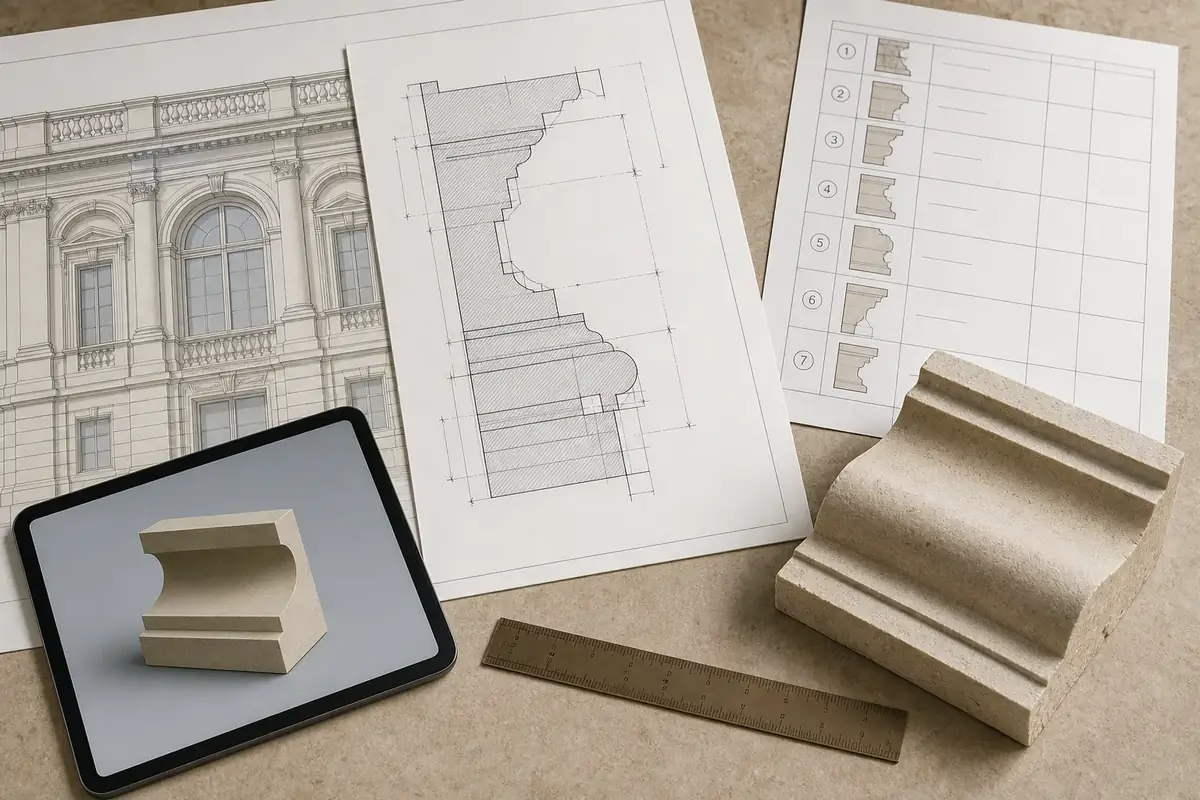
For a useful architectural stone quotation, provide the latest elevations, plans or setting-out information, typical sections, profiles, component schedules, quantities, stone and finish requirements, destination and target programme. Mark unresolved items instead of waiting for every detail to be final.
Read the guide →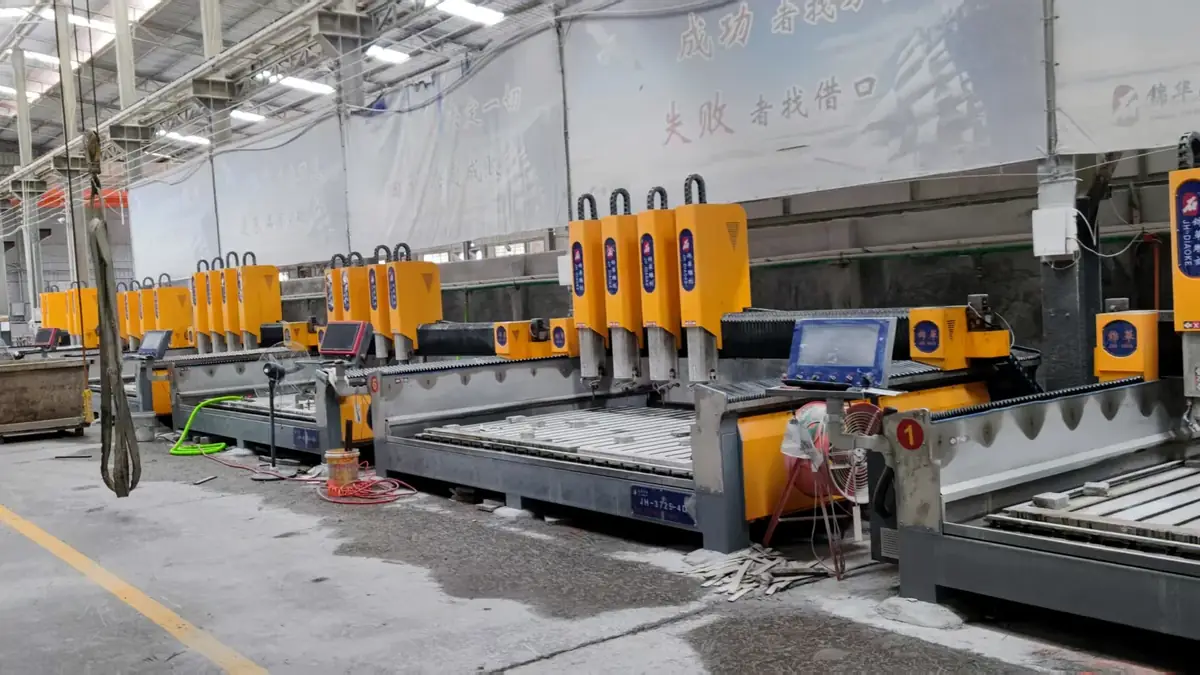 Factory photograph02
Custom stone product categories
Custom stone carving cost depends on the chosen stone, finished dimensions, block yield, geometry, carving depth, repeat quantity, digital preparation, hand-finishing time, tolerances, inspection, packing and destination. A photograph without scale or quantity cannot produce a dependable final price.
Read the guide →Factory photograph03Factory process and equipment
CNC equipment establishes approved scale, primary geometry and repeatable reference surfaces. Skilled carvers then refine transitions, ornament, anatomy, tool character and areas that machines cannot finish appropriately. The balance depends on the design and approved surface standard.
Read the guide →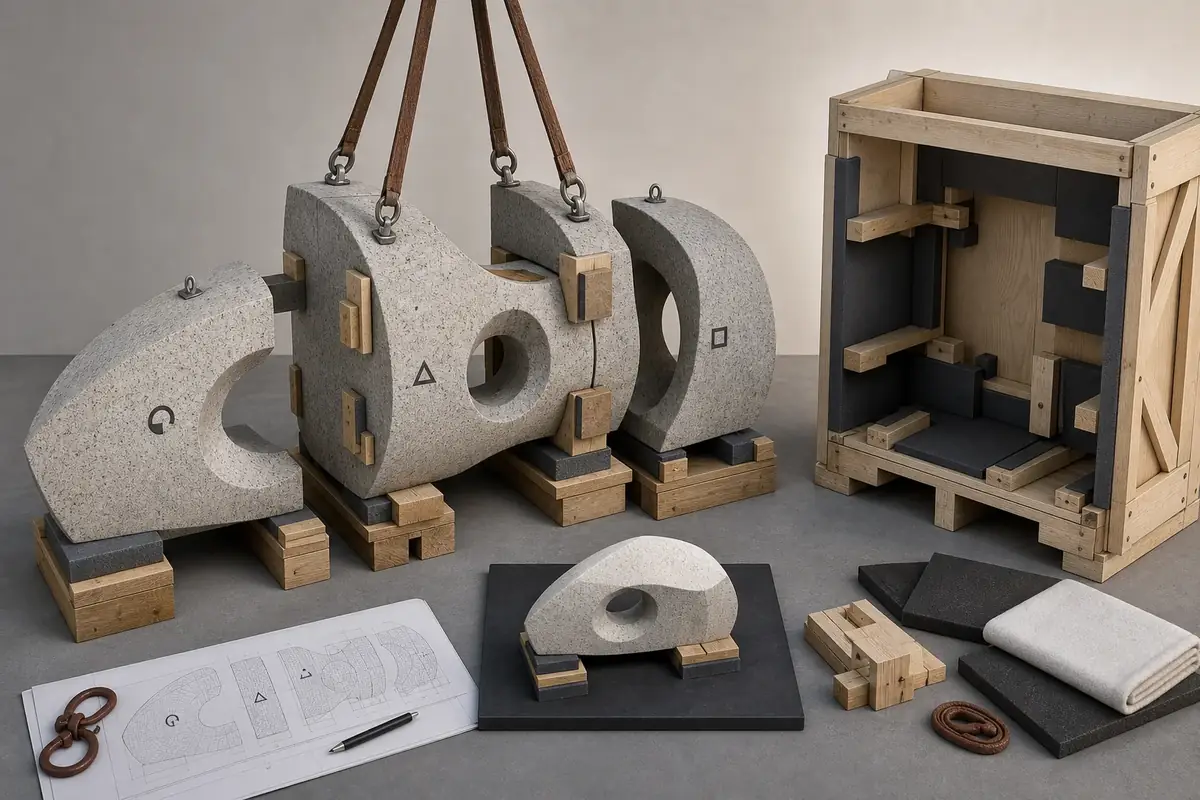 Process illustration04
Packing, shipping and installation coordination
A large stone sculpture is reviewed against finished geometry, centre of gravity, lifting points, container limits, route constraints and the intended installation sequence. Oversized work may be divided into numbered sections with protected interfaces, weights, crate references and assembly information.
Read the guide →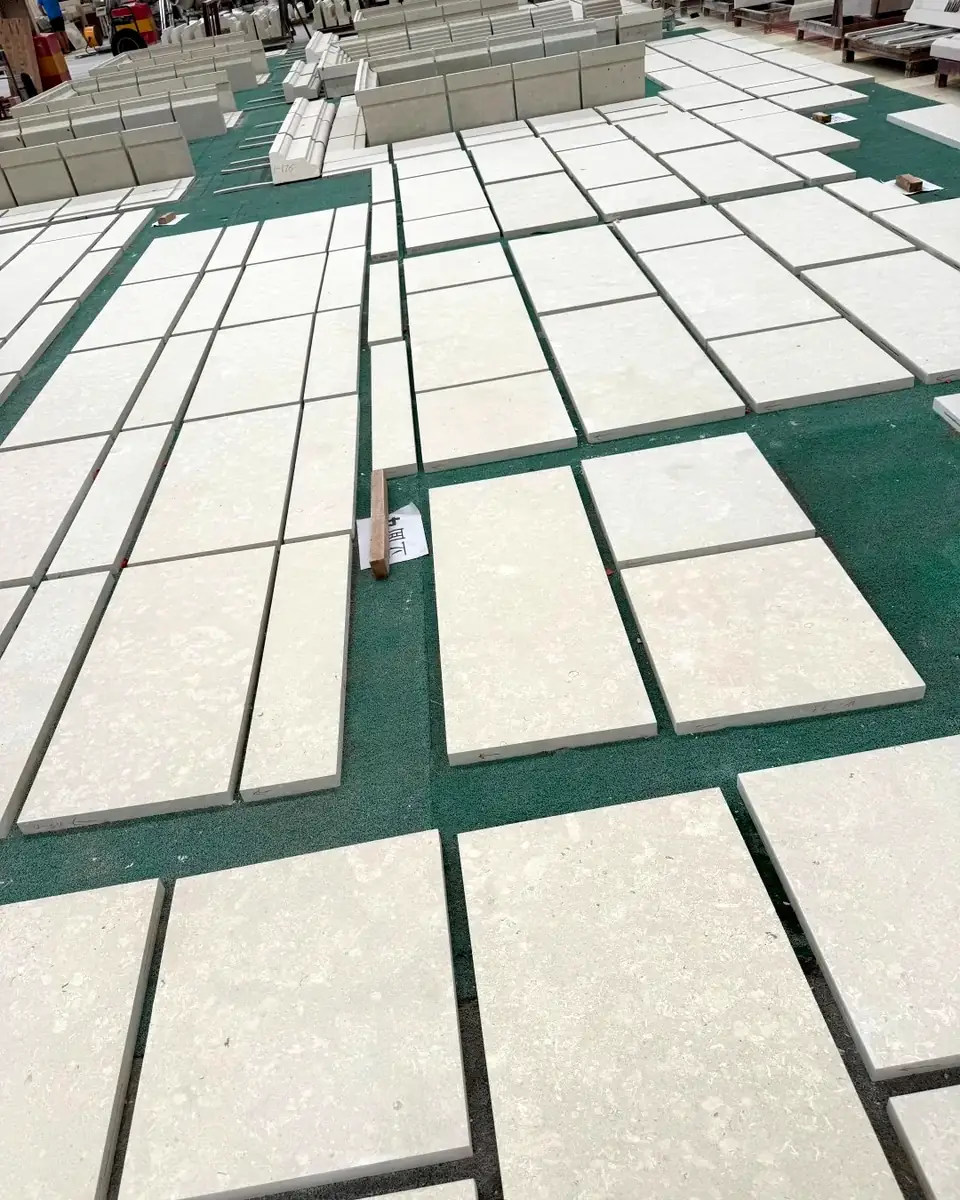 Factory photograph05
Material fabrication guides
Limestone often suits architectural carving and profiled facade work; marble is selected for distinctive veining, fine carving and high-finish interiors or sculpture; granite is frequently chosen for durable exterior sculpture and strong architectural elements. The final decision must be made on the actual stone variety and project exposure.
Read the guide →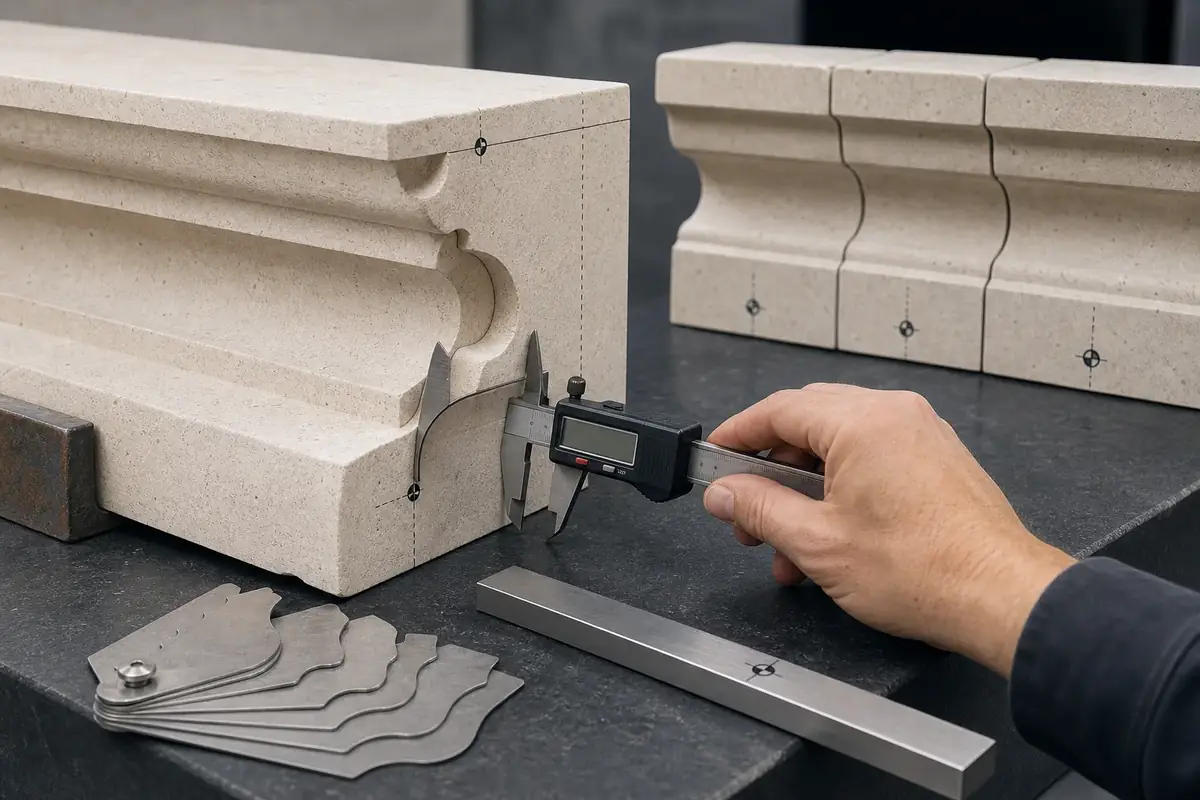 Process illustration06
Materials, testing and quality control
Stone tolerances should be assigned to functional interfaces, profiles, joints and appearance rather than using one blanket number for every feature. The drawing must also state the measurement basis, datum, sample and responsible approval stage.
Read the guide →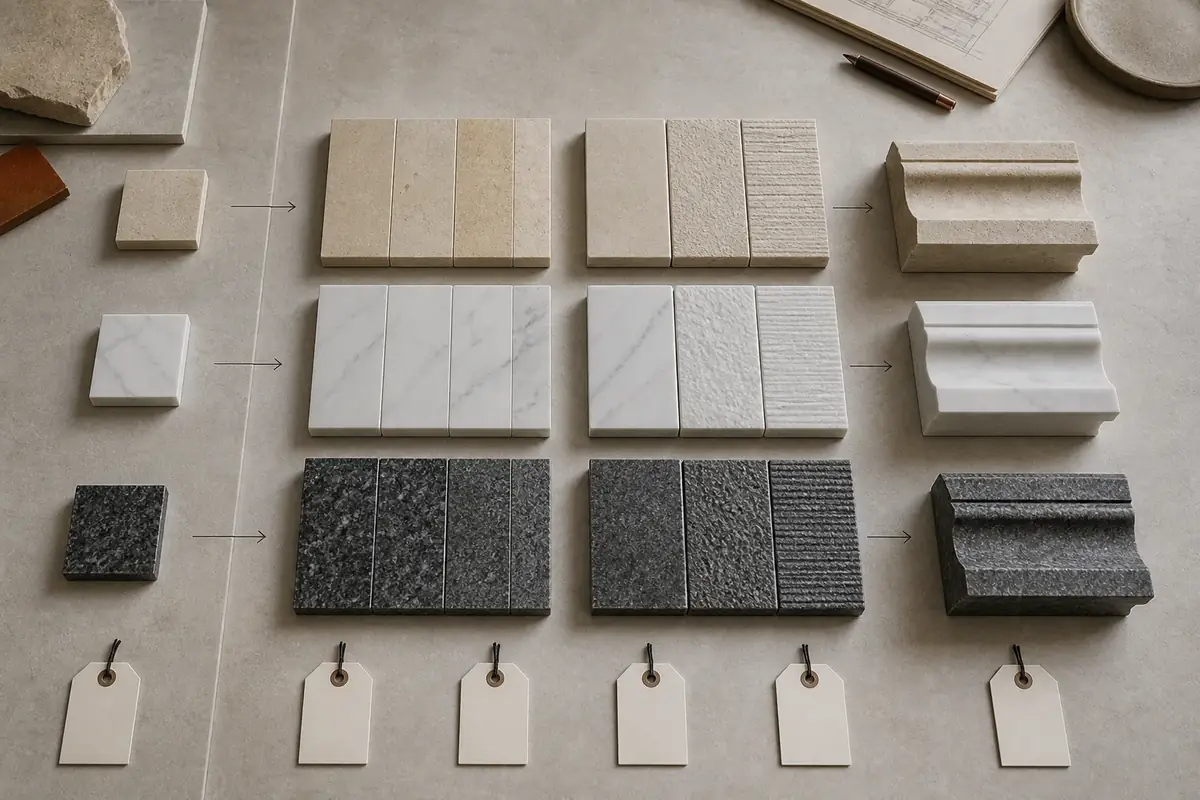 Process illustration07
Quality-control framework
A useful approval system distinguishes the selected stone source, an acceptable visual range, the finish reference and any first-piece or carving sample. Each approval should record lighting, scale, surface treatment, date and drawing or specification revision.
Read the guide →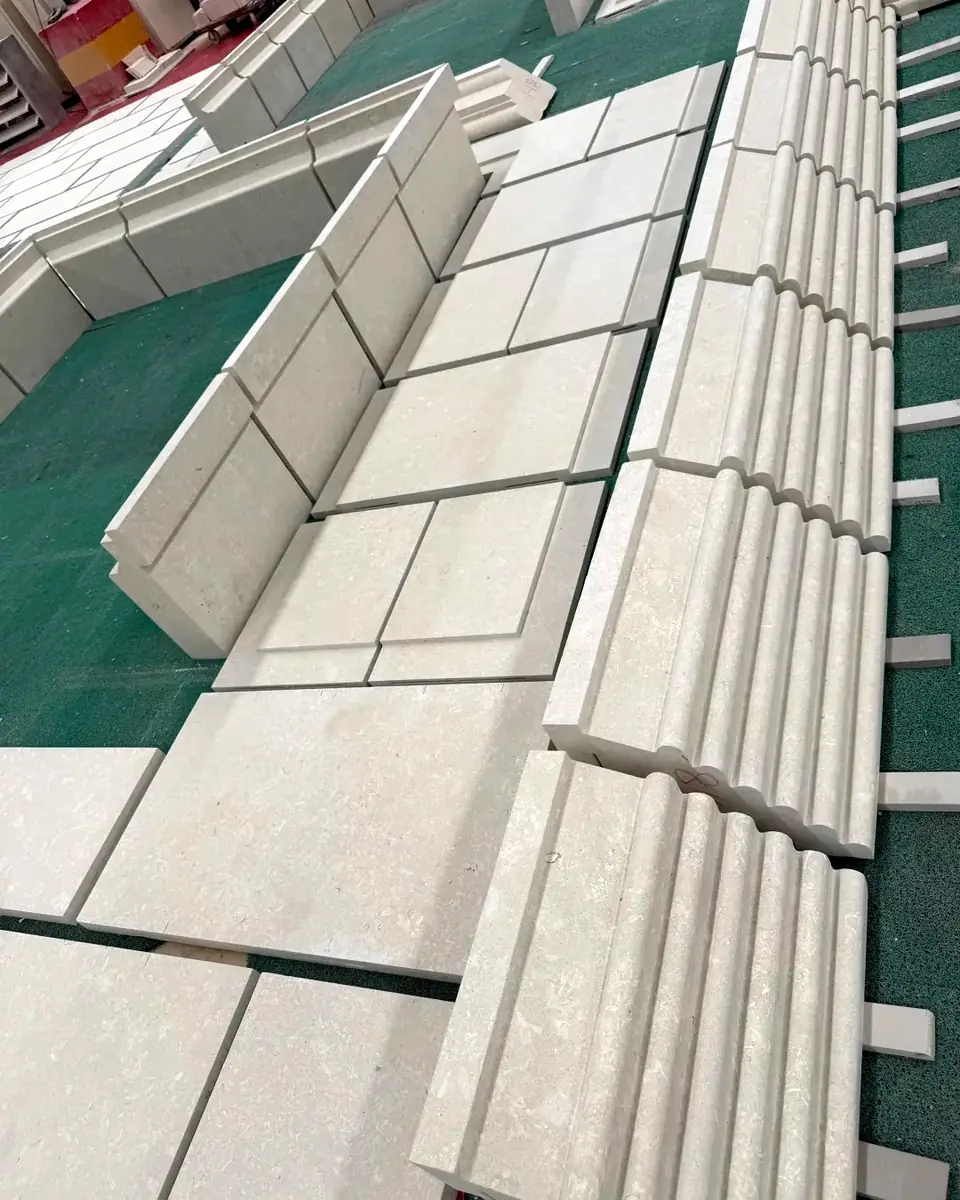 Factory photograph08
International delivery coordination
The factory and local installer coordinate most effectively through an approved component schedule, shared piece marks, agreed interfaces, crate lists, weights, orientation references and a clear responsibility matrix. Local engineering and site execution stay with qualified destination-country parties.
Read the guide →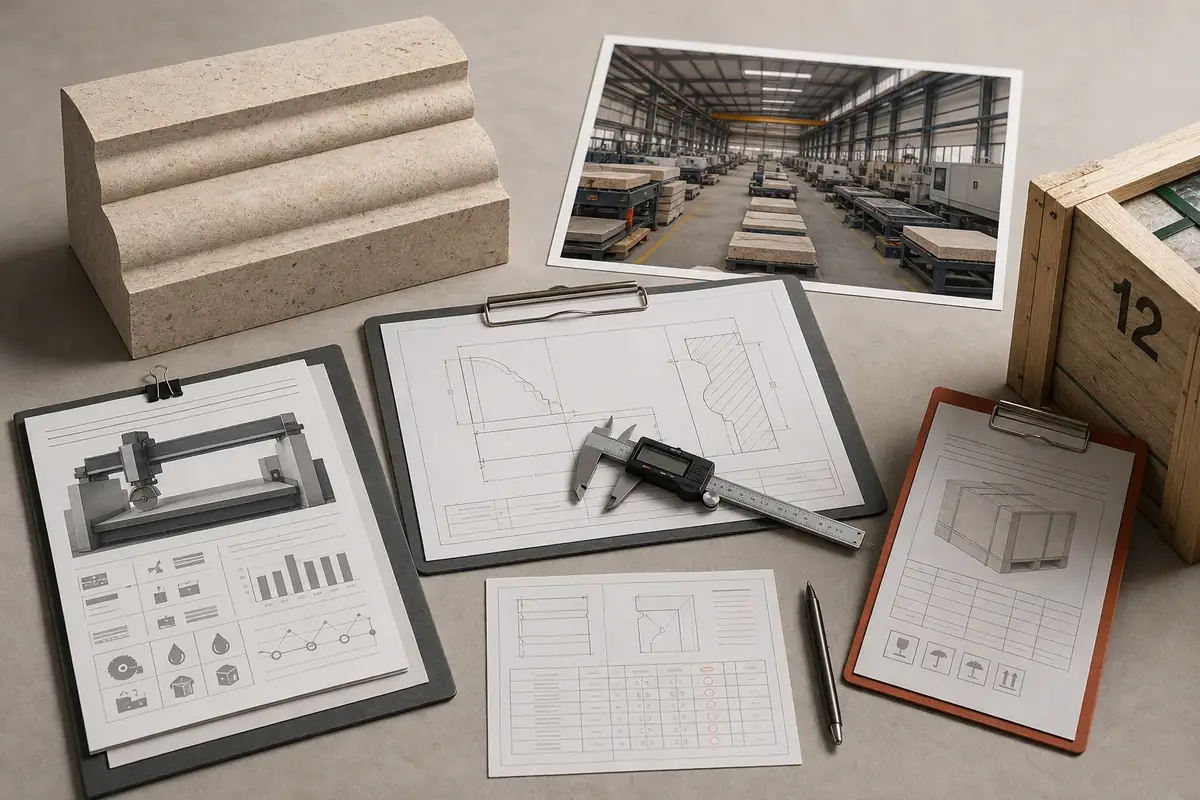 Process illustration09
Factory identity, equipment and process
Audit the legal entity, operating address, named project contacts, people, equipment, material controls, inspection process, capacity evidence and export handover records as one connected system. Request live or dated proof tied to the facility, and use an independent inspector when the commercial risk justifies it.
Read the guide →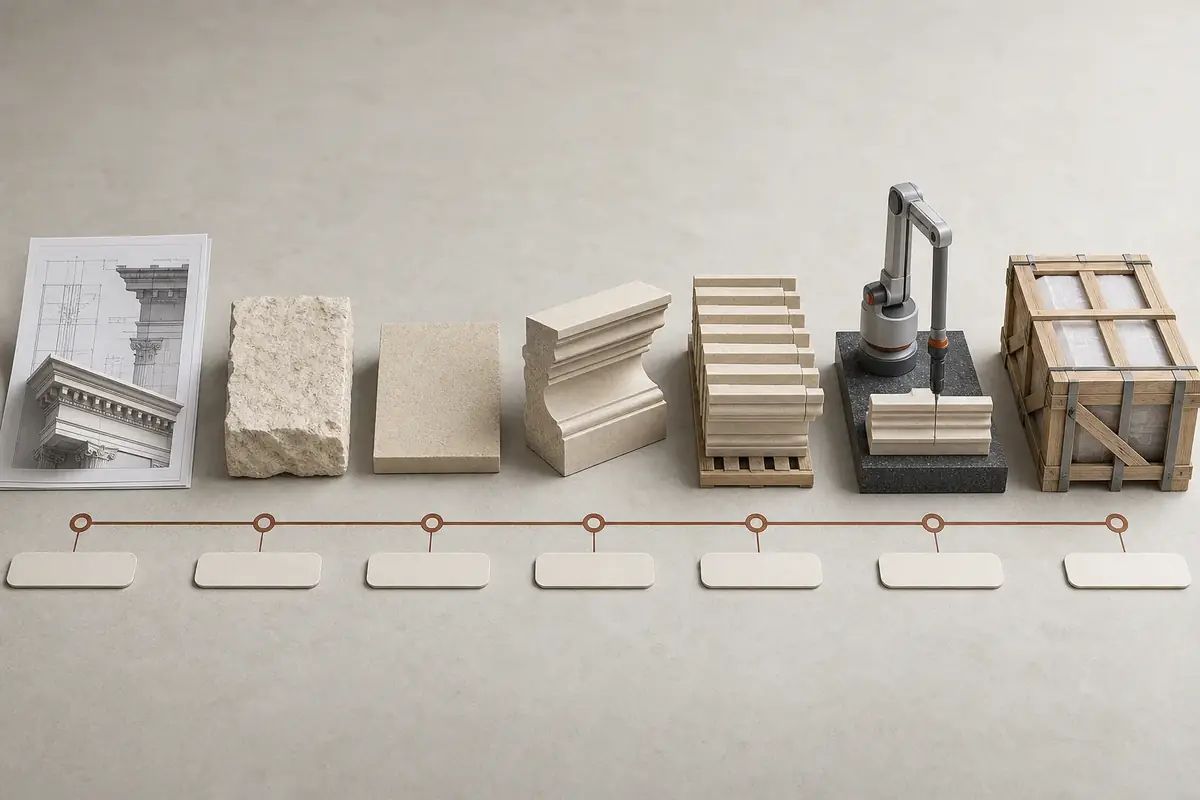 Process illustration10
Send scope for a project-specific programme
A dependable lead time is built from approved milestones: drawing review, material reservation, samples or mock-ups, production-data approval, fabrication, first-article release, inspection, packing and logistics. The schedule becomes reliable only after scope, quantities, stone availability and approval responsibilities are known.
Read the guide →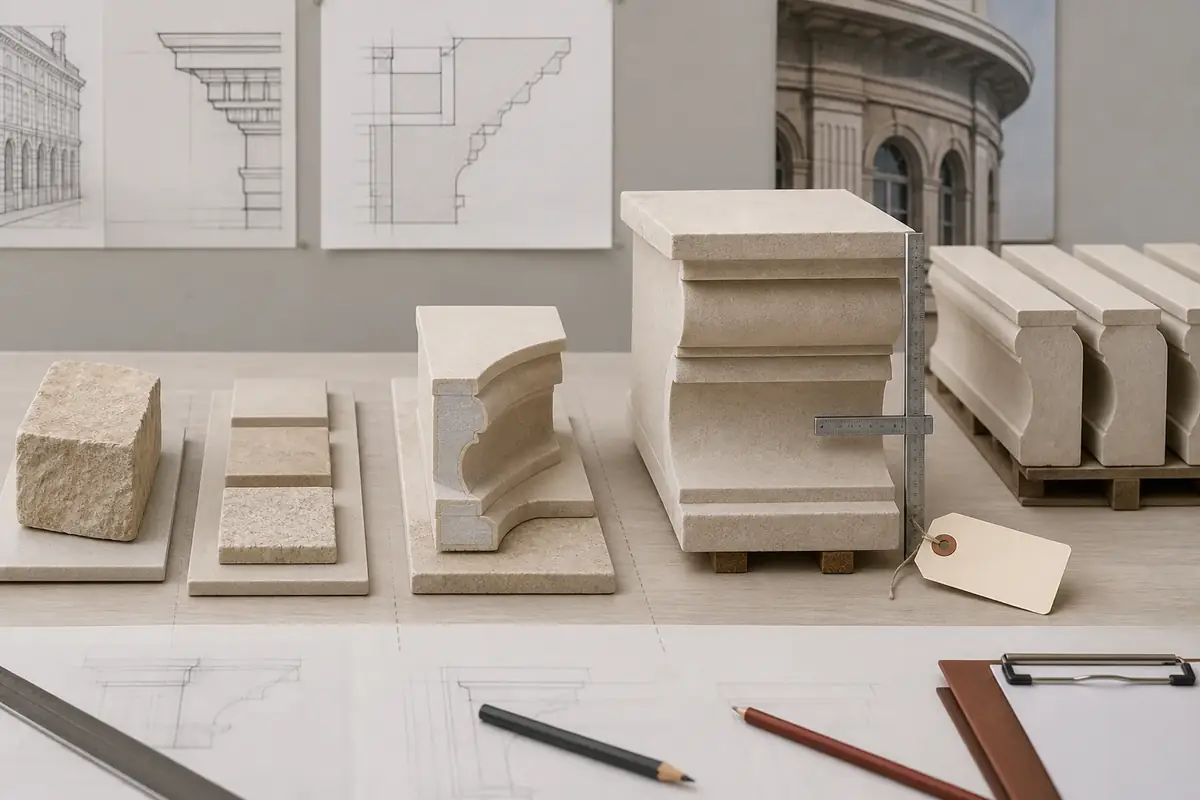 Process illustration11
Materials, samples and inspection controls
Boda Stone accepts export production orders on a full-container-load (FCL) basis. We do not accept standalone one-piece production orders or ship a single sample as an independent international order. Material samples, finish samples, prototypes, mock-ups and first-article approval are planned within a confirmed FCL project because each controls a different production risk.
Read the guide → Process illustration12
Request a scope-based quotation
The quotation should identify the exact scope and revision, inclusions, exclusions, Incoterm, validity period, taxes or duties, sample and testing assumptions, payment milestones and the written variation process. No payment or change term should be inferred from a general web page; the signed quotation and contract control the project.
Read the guide →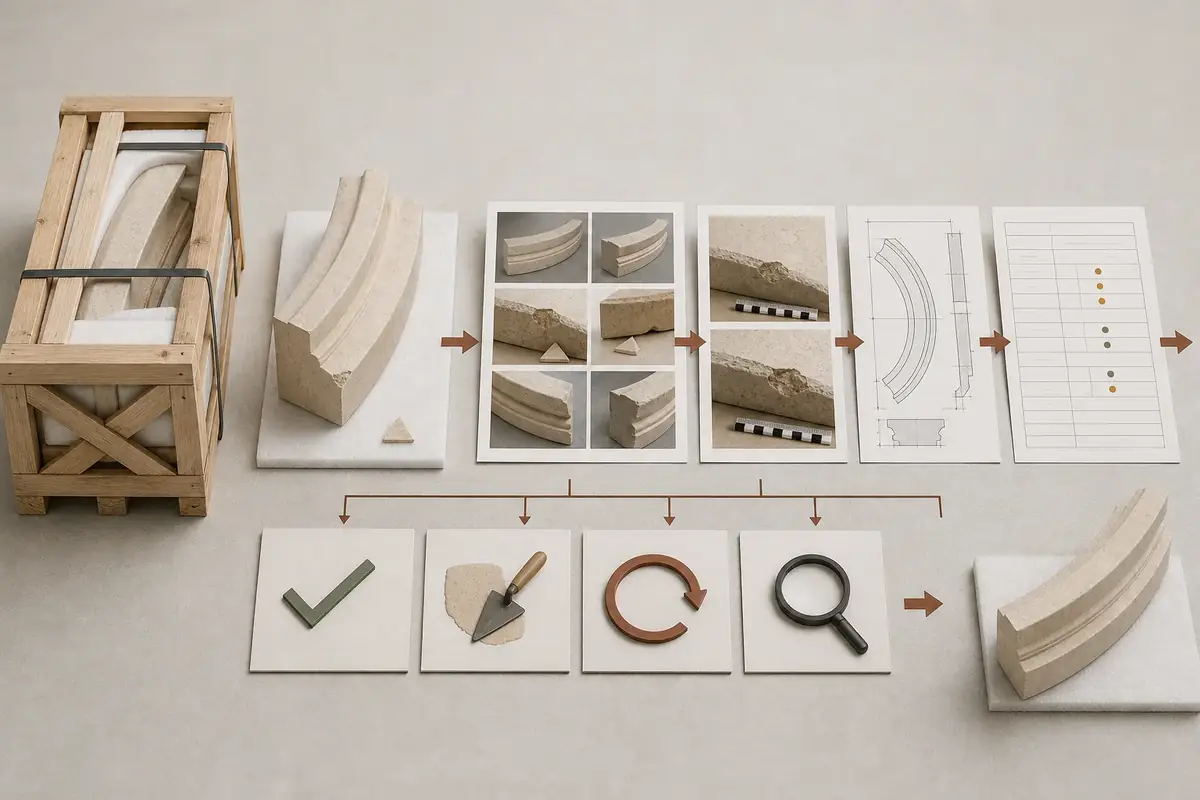 Process illustration13
Packing, shipping and handover controls
Agree acceptance criteria, inspection stages, notification method and evidence requirements before shipment. If a problem occurs, isolate the piece, preserve packaging, record its component and crate numbers, take dated overview and detail images, measure against the approved basis, and review responsibility before authorizing repair or replacement.
Read the guide →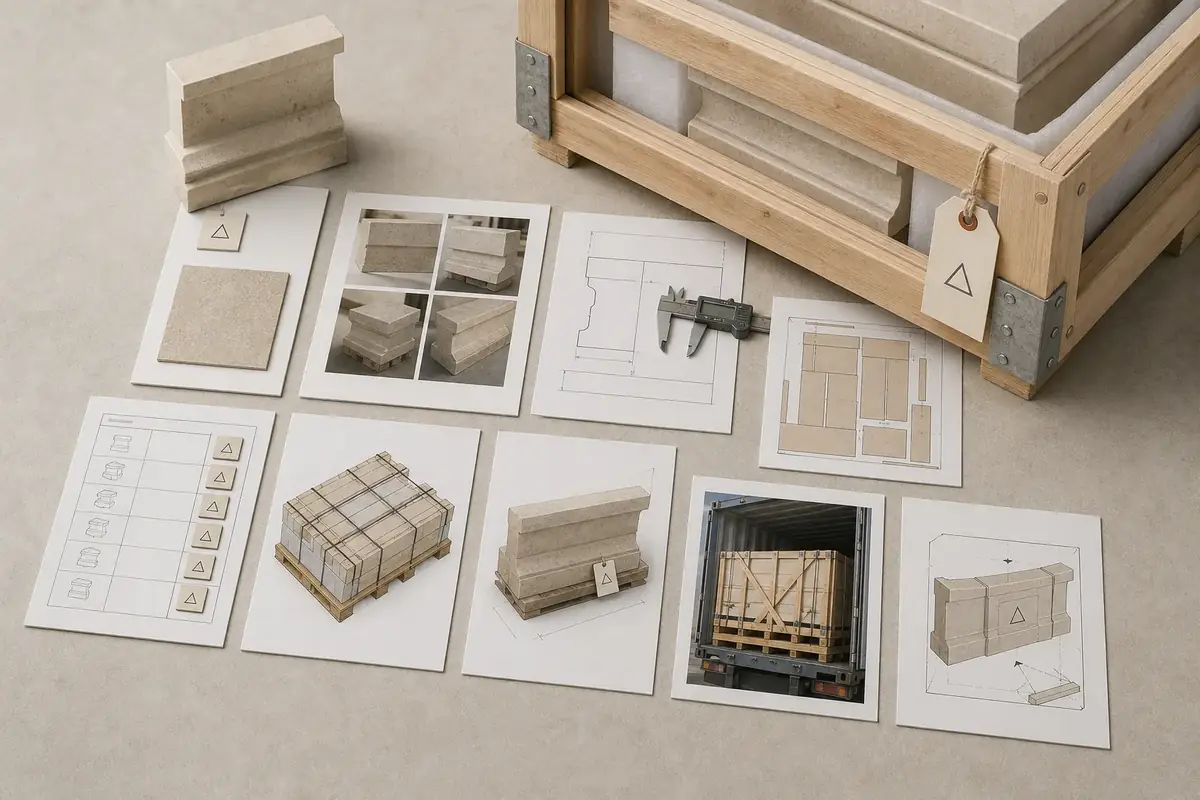 Process illustration14
International packing and installation handover
The final document package should let the buyer identify what was approved, what was produced, where each piece is packed and what the local team needs for safe receipt and coordination. The exact deliverables belong in the quotation and inspection plan because not every project requires the same tests or assembly records.
Read the guide →