Natural stone fabrication guide
Custom Marble Fabrication
Marble is used when the visual character of the stone, fine carving response and polished or honed finish form part of the design. Because veining can influence appearance and local strength, layout and orientation should be decided as part of production planning.
Material at a glance
How does Boda Stone work with this material?
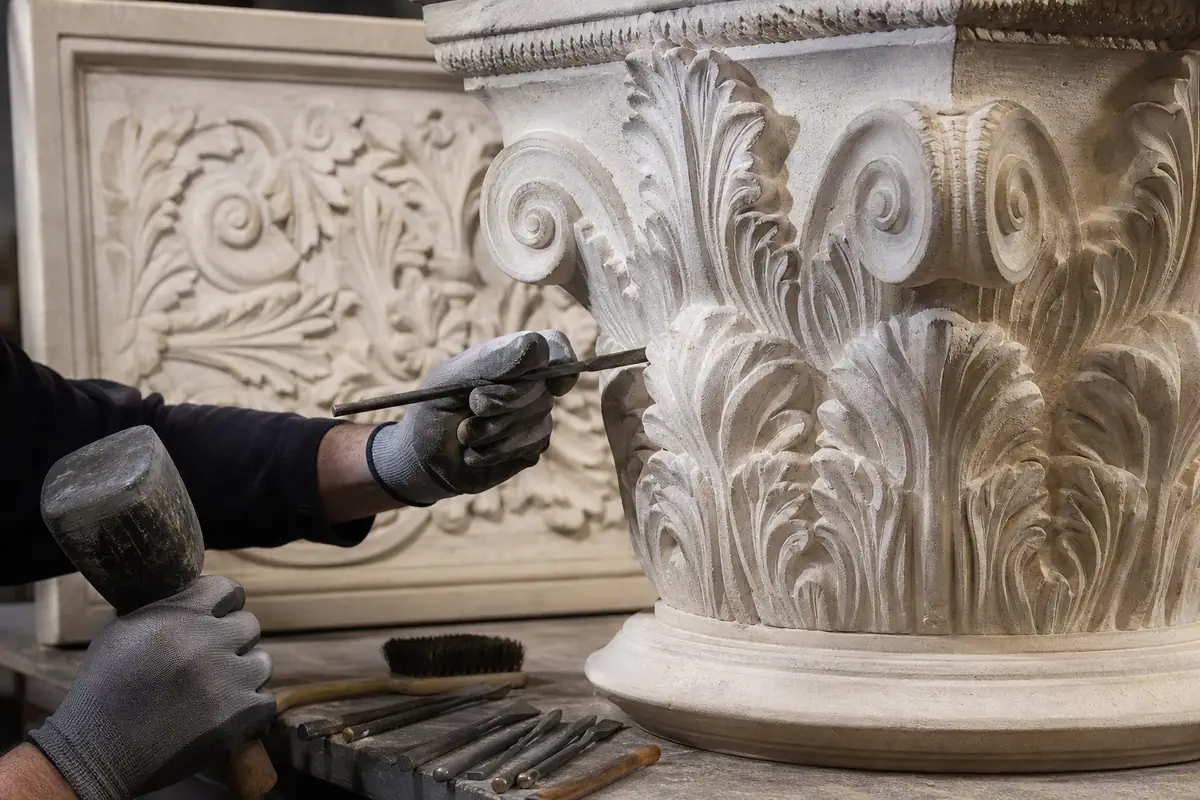
Boda Stone develops custom marble components and sculpture from approved drawings, models or artwork, with particular attention to vein direction, visual range, fragile projections, surface finish and the relationship between machine preparation and hand refinement.
Marble is used when the visual character of the stone, fine carving response and polished or honed finish form part of the design. Because veining can influence appearance and local strength, layout and orientation should be decided as part of production planning.
Project fit
Where the material is commonly considered.
Final suitability depends on the actual source, approved design, exposure and project evidence.
Feature walls and relief panels
Figurative and decorative sculpture
Curved stairs, profiles and special shapes
Fireplace and entrance surrounds
High-finish hospitality interiors
Selection checks
Define the stone before releasing production.
- Approve the commercial stone name and supply source
- Review vein movement across adjoining components
- Identify fissures, open veins and resin expectations
- Define polished, honed or hand-worked reference samples
- Protect thin edges and carving projections
- Confirm indoor or outdoor exposure before selection
Available finish directions
Approve a representative surface.
PolishedHoned or matteSatinSandblastedFine tooledHand-carved texture
Finish names can vary by market and supplier. The physical sample or approved reference should control the result.
Project evidence
Records that can connect approval with delivery.
The exact record set is agreed from project requirements rather than promised as a generic certificate package.
Slab, billet or block selection records when required
Vein-orientation and dry-layout images
Approved finish sample
Dimensional and carving inspection
Repair and filling acceptance criteria
Protected packing and handling references
Buyer questions
Answers before material approval.
Send the proposed stone, exposure, component dimensions and specification for a project-specific review.
Can marble carving begin from photographs only?+
Photographs can support an initial review, but accurate repeat production or sculpture enlargement normally requires measured drawings, a model, scan data or an approved digital reconstruction.
How is marble veining coordinated between components?+
The team can agree orientation rules, dry-layout groups and numbered component records. The degree of matching depends on available block size, natural variation and the approved visual standard.
Can polished and hand-carved areas be combined?+
Yes. The transition and gloss level should be represented by an approved sample because carved recesses, edges and flat fields respond differently during finishing.
Material review
Connect the stone with the actual geometry.
Send drawings, dimensions, finish, destination and any required test schedule. The first response will identify open material and production decisions.