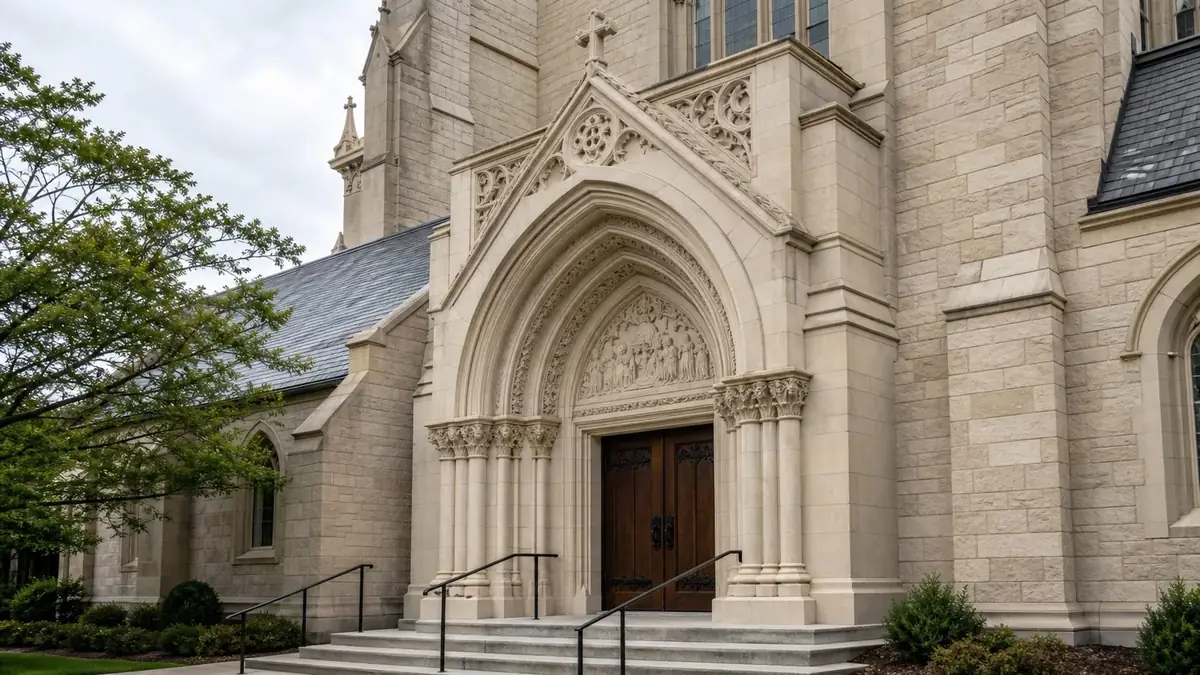
Natural stone fabrication guide
Sandstone Architectural Carving
Sandstone can suit carved portals, reliefs and textured architectural work, but properties vary substantially between sources. The actual stone, not the generic family name, must be matched to exposure and performance requirements.
Material at a glance
How does Boda Stone work with this material?
Boda Stone fabricates carved sandstone components from approved drawings, profiles, artwork and models. Selection and production planning address bedding, grain, colour range, carving depth, vulnerable edges, water exposure, finish and protected delivery.
Sandstone can suit carved portals, reliefs and textured architectural work, but properties vary substantially between sources. The actual stone, not the generic family name, must be matched to exposure and performance requirements.
Project fit
Where the material is commonly considered.
Final suitability depends on the actual source, approved design, exposure and project evidence.
Relief panels and inscriptions
Columns, capitals and mouldings
Landscape and garden carving
Selected church architectural packages
Textured facade components
Selection checks
Define the stone before releasing production.
- Identify bedding and intended installation orientation
- Review grain and lamination against carving depth
- Confirm exterior exposure and water-shedding details
- Approve colour range under consistent lighting
- Avoid unsupported thin projections
- Arrange project-specific test evidence where required
Available finish directions
Approve a representative surface.
SawnHonedSandblastedBush-hammeredFine tooledHand-carved
Finish names can vary by market and supplier. The physical sample or approved reference should control the result.
Project evidence
Records that can connect approval with delivery.
The exact record set is agreed from project requirements rather than promised as a generic certificate package.
Stone-source and sample approval
Bedding-orientation record
Profile and carving checks
Visual range photographs
Testing arranged to the project specification
Piece marking and protected packing
Buyer questions
Answers before material approval.
Send the proposed stone, exposure, component dimensions and specification for a project-specific review.
Is sandstone easy to carve?+
Many sandstones are workable, but carving behaviour varies with grain, cementation, bedding and moisture. A trial on the proposed stone is more reliable than assuming all sandstone behaves alike.
Can sandstone be used for exterior church details?+
Potentially, when the chosen stone and detailing suit the climate and exposure. Bedding, water movement, projections, joints and the required test data should be reviewed before approval.
How are fragile carved edges protected for export?+
Vulnerable projections can be identified during review, separated from crate contact points and protected with project-appropriate supports, wrapping, spacing and crate marking.
Material review
Connect the stone with the actual geometry.
Send drawings, dimensions, finish, destination and any required test schedule. The first response will identify open material and production decisions.