Contact protection
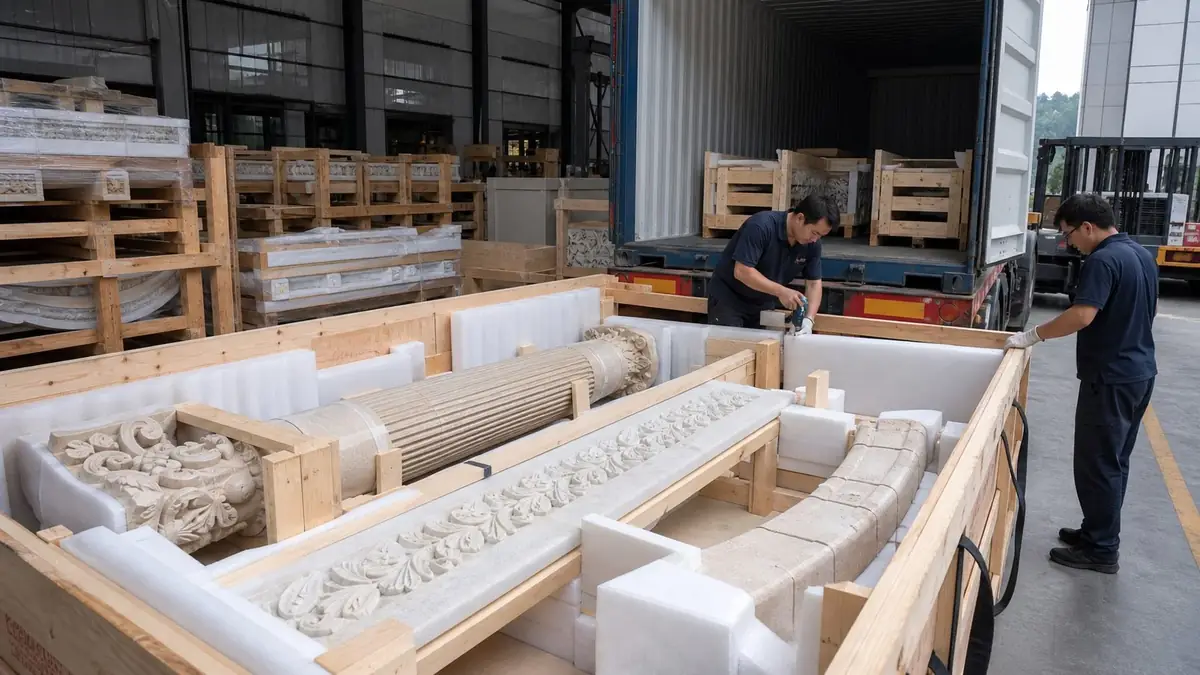
Keep polished, honed and carved surfaces away from hard stone-to-stone or crate contact. Select separators and cushioning around the finish and expected route.
Project-based stone fabrication from Hui'an, Fujian
Export logistics & site handover
Protect carved stone, keep every piece traceable, plan container loading around real limits, and give the local team the records needed to receive and install the work.
Delivery essentials
Treat packing and site handover as part of the fabrication package. Each piece should be identifiable, protected at its actual vulnerable points, connected to a crate and packing record, and loaded around verified weight, handling and unloading conditions. Local lifting, anchors and installation remain subject to the project engineer, qualified installer and local rules.
Packing systems
Carved capitals, curved facade units and segmented sculpture do not use one universal crate detail. Packing is reviewed piece by piece and then coordinated as a shipment.
Keep polished, honed and carved surfaces away from hard stone-to-stone or crate contact. Select separators and cushioning around the finish and expected route.
Identify leaves, fingers, noses, deep relief and thin returns that need clearance, local shielding or alternative orientation inside the crate.
Support weight through suitable areas, limit internal movement and avoid using ornamental high points as load-bearing or restraint points.
Use durable piece and crate marks that can be reconciled with the approved schedule, packing list and site sequence after a long journey.
Architectural stone
Facade components may repeat visually while serving different openings, floors or joint conditions. The marking and packing plan should preserve this distinction.
Monumental sculpture
Large work is often divided because of block availability, fabrication access, weight, transport and site crane limits. The delivery records should follow the approved segmentation.
Seven-stage workflow
The exact responsibility at every stage is defined by quotation, contract, shipment booking and local installation plan.
Review destination, proposed delivery basis, component sizes and weights, container limits, site access, unloading method and installation sequence before final packing decisions.
Connect drawing or model references to individual pieces, crate numbers, packing lists and the sequence in which the site team expects to receive the work.
Separate finished faces, cushion fragile carving and projections, support pieces at appropriate points, control internal movement and manage moisture for the agreed route.
Check piece identity, visible condition, crate references, dimensions, weights and the agreed inspection records before the packing or loading hold point is released.
Plan load distribution, restraint, crate orientation, door access and unloading order within the limits confirmed for the selected equipment and carrier.
Coordinate the agreed commercial and packing records with the buyer or forwarder and confirm the current documentation, port and carrier requirements for that shipment.
The local team checks crates against the packing list, records condition, stages pieces by mark and follows the project engineer's lifting, anchoring and installation information.
From verification to handover
A real container-loading photograph is paired with process visualizations to show how inspection, trial coordination, identification and protective packing connect.
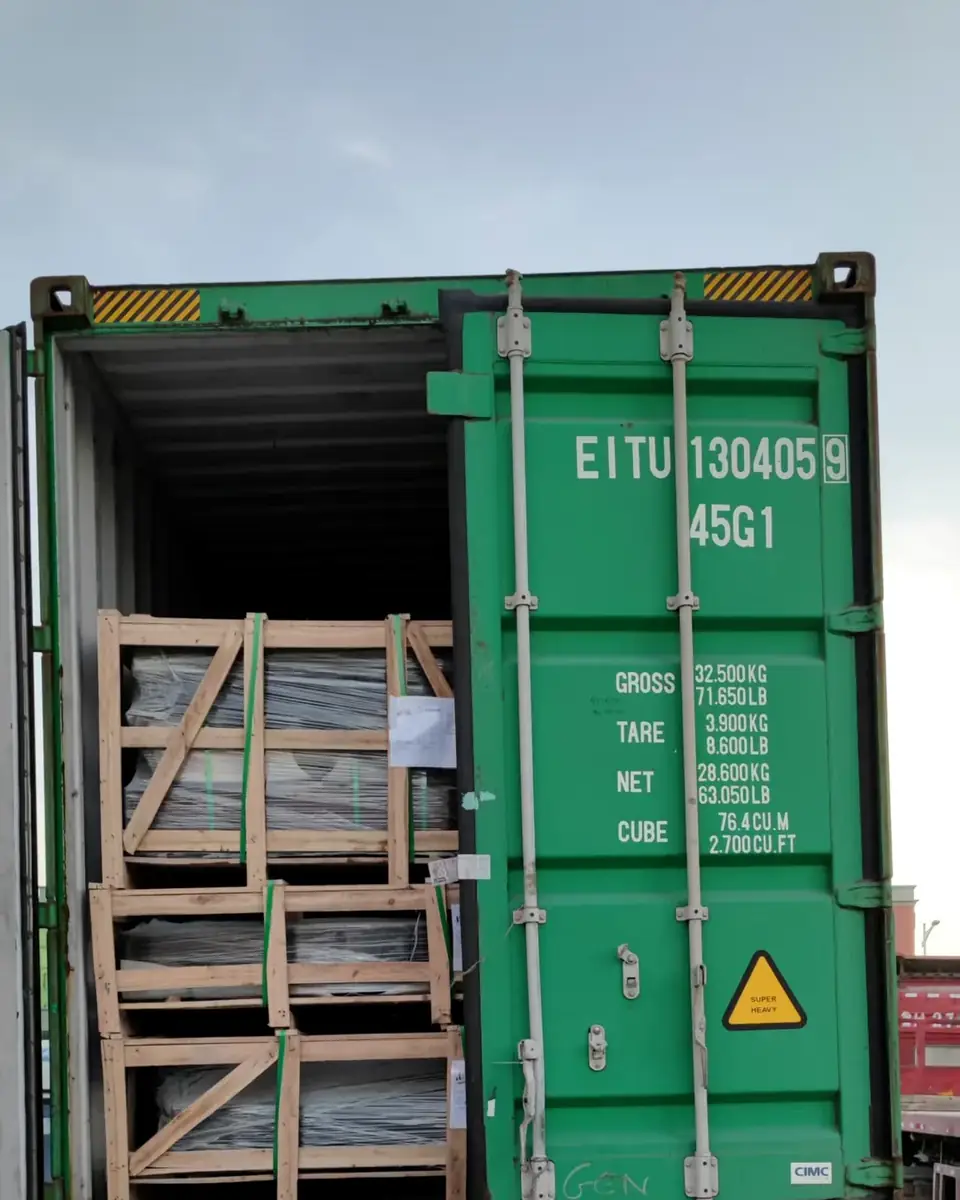
Factory photograph: wrapped, timber-framed units are loaded with crate and shipment references kept visible.

Profiles, joints, returns and piece marks are checked before they must be understood on site.

Approved segmentation, interfaces and assembly order connect the model with packing and site work.

Inspection records and piece identity are confirmed before the final packing or loading hold point.
Image key: container loading is a factory photograph; the other images are process illustrations.
Responsibility matrix
The roles below are a planning framework, not a substitute for the project contract, insurance, transport booking or local engineering appointment.
Shipment records
The actual document set depends on the trade route, contract and authorities. Confirm it with the buyer, customs representative, forwarder and carrier before dispatch.
International standards context
The IPPC's ISPM 15 addresses phytosanitary measures for raw-wood packaging moving in international trade. IMO's SOLAS VGM framework makes verified gross mass a condition for loading a packed container and places the submission responsibility on the shipper named in the transport document.
Destination-country, port, terminal and carrier procedures may add operational requirements. The contracted parties should confirm the current route before shipment.
Site receipt checklist
A controlled receipt process protects both the stone and the project record. It also helps the local team separate transport condition from later handling or installation issues.
Packing & shipping FAQ
These answers cover recurring logistics and handover intent without assuming one route, container, delivery term or installation arrangement suits every project.
The packing method is developed around the actual weak points. Finished faces and projecting carving are separated from hard contact, edges are protected, pieces are supported to reduce movement, and crate identity is connected to the packing list. The final system depends on stone, geometry, weight and route.
Many international movements of raw-wood packaging are subject to destination-country phytosanitary rules based on ISPM 15. Where required, compliant treated and marked wood packaging should be arranged and the current import requirements confirmed for the destination before shipment.
Architectural pieces can follow elevation, zone, floor, opening or component schedule references. Sculpture sections can follow the approved model and assembly sequence. Each project should use one controlled marking system across drawings, pieces, crates and packing lists.
Container selection cannot be decided by product name alone. Piece and crate dimensions, gross weights, payload, centre of gravity, loading method, route restrictions and unloading access are reviewed with the forwarder or carrier before booking.
The delivery basis can be discussed for the actual enquiry and destination. The quotation should state what is included, who appoints the forwarder, who handles customs and insurance, the named handover point and which charges or risks remain with each party.
Under the SOLAS VGM framework, the shipper named in the transport document is responsible for providing verified gross mass in time for vessel stowage planning. The practical weighing and submission route must be confirmed with the forwarder, carrier and terminal for each shipment.
Unless the contract states otherwise, the buyer and local contractor normally plan site access, unloading equipment, crane or forklift capacity, temporary storage and local safety controls. Responsibilities must be written into the order and logistics plan rather than assumed.
Local installation is normally carried out by qualified contractors working under local engineering, permits and code requirements. The factory scope can support them with piece marks, packing sequence, approved assembly references, weights, photographs and remote coordination as agreed.
The receiving team should photograph the container, crate and piece condition before and during unloading and notify the contracted parties promptly. Piece marks, approved geometry, material references and finish records help review a repair or replacement route; liability depends on the contract and insurance.
Send the destination or named delivery point, component schedule, dimensions, quantities, estimated or known weights, preferred timing, site-access constraints and requested delivery basis. Final freight cost remains subject to booking date, equipment, route, carrier and applicable charges.
Project logistics review
Include drawings or model, piece dimensions and quantities, available weights, destination, target delivery, proposed handover point and known site-access constraints.